



A homeowner with a failed septic inspection, a wet yard, a washed-out driveway, or a rural lot that needs site preparation does not wake up thinking about your marketing budget. They wake up thinking about the problem on their property, how serious it may be, and who they can trust to fix it.
Until recently, many of those homeowners started with a short Google search. They typed “septic repair near me,” “drainage contractor,” or “excavation company for driveway.” That still happens. But more people are now starting with a longer question in ChatGPT: “My septic inspection failed. What does that mean, what should I expect, and what type of contractor do I need?”
That shift matters because a homeowner who asks a detailed question is usually beginning a serious buying process. They are trying to understand a disruptive, expensive problem before they invite someone onto their property. Your advantage is to make the company easier to understand, verify, and contact while they research.
Homeowners are asking better questions before they call
A standard Google search can be short and urgent. Someone who searches “septic pumping near me” may be close to making a call. Someone who searches “excavation contractor drainage repair” may already know the kind of work they need.
A ChatGPT question often begins earlier. A homeowner might ask what a failed drain field means, whether a septic issue can be repaired instead of replaced, whether a flooded driveway needs regrading or a culvert, or which contractor should handle site prep for a rural build. They may need help identifying the problem before they need help selecting the contractor.
That does not mean ChatGPT replaces Google. It means your website needs to answer the kinds of questions homeowners already ask your office. If a property owner is trying to understand a septic repair, drainage issue, culvert, driveway rebuild, grading problem, or site-prep decision, your site should make it clear that you understand the work and can guide them through the next step.
Your website should sell the work you want more of
Too many contractor websites make a homeowner work too hard. A septic company says it offers “all septic services.” An excavation company says it does “all types of dirt work.” Neither statement answers the question in the customer’s mind: “Can this company solve my problem?”
Specific pages do a better job. A septic company may need dedicated pages for septic inspections, repairs, system replacement, pumping, and septic excavation. An excavation company may need pages for drainage correction, culverts, driveway construction, site preparation, land clearing, final grading, and trenching. You do not need dozens of thin pages. You need a concise group of strong pages that match the work you want on the schedule.
Each service page should explain the problem, the work involved, the variables that can affect scope, the area you serve, and what information a homeowner should provide when they contact you. A page about septic replacement should help someone understand when a replacement may be necessary and what a professional evaluation looks like. A page about driveway drainage should help a homeowner see why water is damaging the drive and what an excavation contractor may need to assess.
Proof beats clever marketing language
Homeowners may begin with research, but they will not hire you because of a clever headline. Septic replacement, major drainage correction, excavation, and rural site work are expensive, disruptive projects. A homeowner wants proof that the company they call has handled this kind of work before.
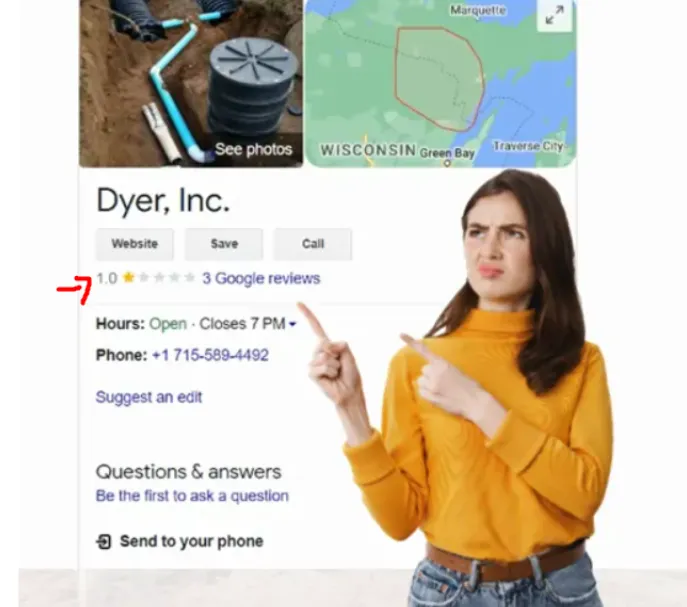
That proof should be visible. Use real project photos. Show the equipment, site conditions, and finished work that represent the jobs you want more of. Use legitimate reviews that mention the customer experience, responsiveness, workmanship, or project type. Explain the service area clearly. If you handle permits, inspections, or coordination with other professionals, explain your process honestly.
ChatGPT should support Google, not replace it
Google PPC is a demand-capture channel. A homeowner searching “septic repair near me” or “drainage contractor near me” is showing active intent. A well-built campaign can put your company in front of that person at the right moment. Google defines cost-per-click advertising as payment when someone clicks your ad, which is why the landing page, call handling, negative keywords, and estimate process have to be strong. A click is not a profitable job until your system turns it into one.
Local Services Ads can be closer to a ready-now lead source where your category and market are eligible. Google says Local Services advertisers pay for valid leads rather than every impression. The channel can be valuable for calls and messages, but the outcome still depends on reviews, verification, competition, service selection, response speed, and whether you can handle the work the lead actually needs.
Meta ads can work earlier in the journey. A homeowner may not be actively searching for an excavation contractor while scrolling Facebook or Instagram, but a real drainage before-and-after, a septic inspection reminder, or a rural site-prep story can earn attention. Meta lead ads can collect a form submission, call, or message, but the lead often needs stronger follow-up than a homeowner who has just searched for a specific service.
ChatGPT sits in the research stage, while a homeowner is deciding whom to trust. It should reinforce your other channels, not compete with them. A homeowner may ask ChatGPT a question, search your company name on Google, read reviews, visit a service page, see a social post, and call the next day. That is how real buyers make decisions.
The best content ideas are already inside your business
If homeowners keep asking whether a septic system can be repaired or must be replaced, address that question. If people do not understand the difference between grading and drainage, explain it. If property owners ask why a driveway keeps washing out, describe the factors a contractor investigates. If they want to know what affects the cost of septic replacement or site preparation, give them an honest overview without pretending every job is identical.
This kind of content works because it is based on real conversations. It makes the homeowner feel understood before the phone rings. Someone with a failed septic system does not want a sales pitch. They want a straight answer about what may be happening and what a qualified contractor needs to inspect. Someone with a flooding yard wants to know whether the issue is minor, chronic, or affecting the property in a way that requires professional drainage work.

Make the next step easy and track the result
A strong service page is wasted if the homeowner cannot quickly figure out what to do next. Your phone number should be visible. Your contact form should be short. Your service area should be clear. Your team should set a realistic response expectation and meet it.
If you need certain information to assess the opportunity, say so. A septic contractor may need the property address, photos, an inspection report, and a short description of the issue. An excavation contractor may need the location, project type, site access, timeline, and a few photos. Clear intake protects your estimator’s time and helps the homeowner feel that the first conversation will be useful.
Track the lead source, but do not pretend attribution will always be perfect. A homeowner may see your truck, ask a neighbor, read Google reviews, ask ChatGPT a question, search your company name, and then call. Ask every new lead how they first heard about you and record the answer in your CRM.
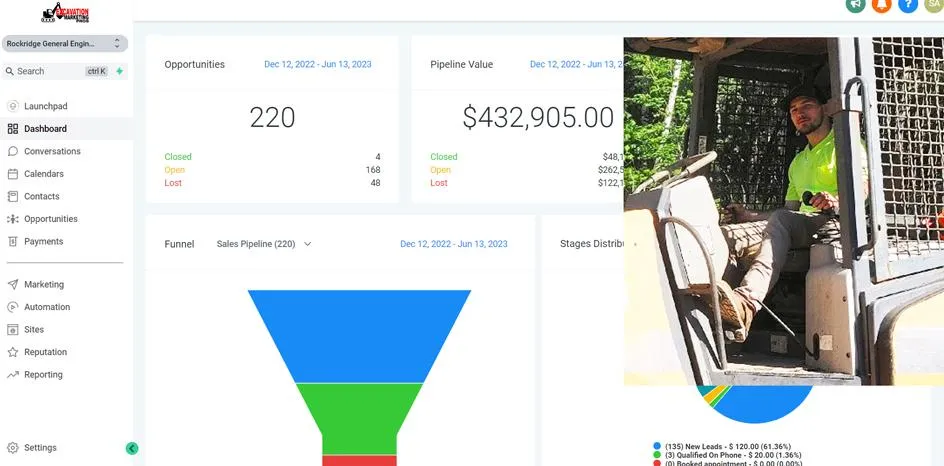
Then measure what happens after the inquiry. Was the lead qualified? How quickly did someone respond? Was an estimate scheduled? Did the job close? What service was requested? What was the booked revenue and gross profit? Established septic contractors and excavation contractors do not need more random inquiries. They need trackable opportunities that fit their crew, equipment, service area, and target margins.
The contractor who is easiest to trust has the advantage
Be careful with anyone promising to rank your company number one in ChatGPT. OpenAI is clear that search placement is not guaranteed. No legitimate marketer can promise that your business will always appear when a homeowner asks who to hire.
The better approach is more durable. Build clear service pages, keep business information accurate, collect real reviews, add real job photos, answer customer questions, and follow up quickly. The same work makes your company more credible in AI-assisted research, Google Search, Local Services Ads, Meta campaigns, referrals, and branded searches.
You cannot control where every homeowner starts looking. You can control what they find when they do. If they can understand what you do, verify the proof, see that you serve their area, and reach a team that responds professionally, you have given them a reason to call.
Send us a message today to find out how Excavation Marketing Pros can help your excavation or septic company build the content, proof, tracking, and follow-up system that turns better local research into better opportunities.
Sources and accuracy notes
OpenAI’s Searching the web with ChatGPT explains that ChatGPT Search can use web search, citations, and local context when relevant, and that placement is not guaranteed. Google Ads defines cost-per-click bidding as payment when an ad is clicked. Google Local Services explains eligible provider visibility and valid lead charging. Meta’s lead ads guidance describes leads captured through forms, calls, and messaging. Sources reviewed October 5, 2026.













Facebook
Instagram
X
LinkedIn
Youtube
TikTok