




More leads sound like the answer when the phone has been quiet. More jobs sound like growth when the calendar has open days. But for an established excavation or septic company, more demand can create a problem that looks like success from the outside and feels like chaos inside the business.
The office is answering more calls, but nobody is sure which inquiries deserve an estimator’s time. Quotes are being sent, but they are not followed up with consistently. The crew is booked, but the schedule keeps changing. The owner is working later, not earning more. Customers are waiting for callbacks, field teams are driving farther than they should, and the jobs that create the best margins keep getting pushed aside by whatever came in first.
That is the contractor growth trap. It happens when the marketing produces more opportunities than the operating system can qualify, sell, schedule, and deliver well.
For septic contractors, the pressure can arrive as a mix of emergency pumping calls, inspections, repairs, drain-field concerns, and system replacements. For excavation contractors, it can show up as a stream of driveway fixes, drainage requests, trenching, site preparation, clearing, grading, and projects that look easy until the crew is standing on the property. In both businesses, the first instinct is often the same: buy more leads and keep saying yes.
The better move is to make sure more demand will actually create better work.
More Leads Do Not Automatically Mean More Profitable Growth
A lead is only the beginning of a chain of decisions. Someone has to answer the call, gather useful information, determine whether the property is in the service area, identify the requested work, schedule an estimate, deliver a clear proposal, follow up, win the job, schedule the crew, complete the work, invoice correctly, and protect the customer experience all the way through the final payment.
When any part of that chain is weak, more leads magnify the weakness. A missed call becomes more than a missed call. It becomes wasted ad spend, a homeowner who calls a competitor, and a team that cannot tell what happened. A slow estimate process becomes a quiet pipeline leak. A vague service offer creates more bad-fit calls. A crew schedule built around interruptions makes it harder to protect deadlines and margins on the jobs the company wants most.
This is why a company can have a full calendar and still feel like it is standing still. Revenue may be higher, but profit, capacity, customer satisfaction, and owner time may all be moving in the wrong direction.
Established septic and excavation contractors do not need random demand. They need a system that turns the right demand into predictable work.
The Warning Signs That Growth Is Becoming Chaos
The first warning sign is when the owner becomes the permanent traffic controller. Every call needs a decision. Every estimate needs follow-up from the owner. Every crew question comes back to one person. Every unhappy customer needs an immediate rescue. The company has people, software, and equipment, but the business still runs through one overloaded individual.
Another sign is when the office and the field are working from different versions of the same job. The office believes an estimate was scheduled. The estimator believes the customer was not ready. The crew arrives without the right information. The homeowner thought a different service was included. None of these issues has to be a disaster by itself, but together they create rework, tension, and a reputation problem.
Look closely at the schedule as well. If the team is constantly moving work around because a last-minute job appeared, you may not have a capacity problem yet. You may have a qualification and job-selection problem. A good emergency lead may deserve immediate attention. A low-margin request with unclear scope should not automatically displace work that is already planned, profitable, and important to a customer.
The most revealing question is simple: when a new lead enters the business, does your team know what should happen next? If the answer depends on who picks up the phone, how busy the owner is, or whether the estimator happens to have time, more marketing will only make the inconsistency more visible.
Define the Work You Want Before You Ask for More of It
Every company should be able to describe the jobs it wants more of. That does not mean turning away every smaller project or pretending that everyday customers do not matter. It means knowing which services, service areas, customer types, and project sizes fit the business you are building.
A septic company may want to protect a route of recurring pumping work while creating more opportunities for inspections, repair evaluations, and system replacements. An excavation company may want more rural site-prep projects, drainage corrections, driveway construction, septic excavation, clearing, or grading work instead of spending every afternoon on low-value requests that require a full equipment move.
The answer comes from your own numbers. Review the jobs that have produced the strongest gross profit, the smoothest delivery, the best reviews, and the most repeat or referral value. Then compare those with the jobs that created callbacks, travel, scope confusion, unhappy customers, or thin margins. The contrast is often clearer than owners expect.
Once you know the work you want, your marketing can become more honest and more effective. Your website can explain the services in useful terms. Your ads can point homeowners toward specific problems you solve. Your reviews can show evidence of the work. Your office can ask better questions before an estimator drives to the property.
Good marketing should help the market understand what you do best. It should not force your business to chase every request that appears in the inbox.

Build a Lead Intake System That Protects the Estimator’s Time
The first few minutes after an inquiry matter. A fast response is important, but speed without structure creates a different kind of waste. The goal is to respond quickly while gathering the information that helps the company make a good decision.
For a septic lead, the office may need the property address, the service requested, the homeowner’s description of the issue, the timing, and any inspection report or photographs that can clarify the problem. For an excavation lead, the team may need the property location, the project goal, access conditions, scope, timeline, photos, and whether the customer has a site plan or utility information.
The point is not to give homeowners a difficult questionnaire. It is to prevent an expensive field visit from becoming the first useful conversation. A short, consistent intake process lets the office identify service-area fit, service fit, urgency, and the next appropriate step. It also gives the customer confidence that the company knows how to handle the problem.
This is especially important when a lead may involve both septic and excavation work. A homeowner calling about a failing system may also need access improvements, drainage correction, site work, or coordination with other contractors. A better initial conversation can reveal the full opportunity without turning the caller into a generic lead record.
Faster Quotes Are Only Valuable When Follow-Up Is Built In
Many established contractors can produce an estimate within forty-eight hours. That is a good standard, but it is not the same as having an estimate follow-up system. A proposal that arrives quickly and then sits unanswered is still a weak sales process.
The customer’s decision timeline should guide the follow-up. An emergency repair lead may need immediate communication. A system-replacement homeowner may be comparing options, talking with family, waiting for financing, or planning around permits. A rural site-prep prospect may be coordinating a builder, lender, engineer, or land purchase. The office should know which follow-up path applies rather than assuming every prospect will behave the same way.
A dependable process gives every proposal an owner, a next follow-up date, and a reason for the conversation. The goal is not to pressure people. It is to remove uncertainty. The homeowner may need a clearer explanation of scope, a question answered, a site visit scheduled, or a reminder about what happens next.
When follow-up is consistent, the company learns more than its close rate. It learns which service categories move quickly, which offers create confusion, which competitors are being mentioned, and where the customer experience needs work. That is useful information for marketing, estimating, and operations.
Capacity Must Be Managed Before You Increase Spend
Marketing can produce opportunities. It cannot create an available crew, add an estimator to the team, make an equipment move disappear, or repair a schedule that has no room for changes. Before you increase the lead budget, look honestly at where capacity is breaking.
If calls are coming in but nobody responds quickly, start with call handling and after-hours coverage. If estimates are taking too long, identify whether the bottleneck is intake, site visits, proposal preparation, approvals, or owner review. If jobs are sold but cannot be scheduled for weeks, examine crew capacity, equipment availability, and the kinds of work consuming the calendar.
Sometimes the solution is not to spend less on marketing. It is to stagger the demand. You may promote certain services in a season when the crew has room. You may increase the minimum for a job category that is disrupting larger work. You may add administrative support so the owner is not the only person who can qualify a lead or move an estimate forward.
The important distinction is this: capacity management is not a reason to stop growing. It is a way to make growth less painful and more profitable.
Measure the Full Path From Lead to Gross Profit
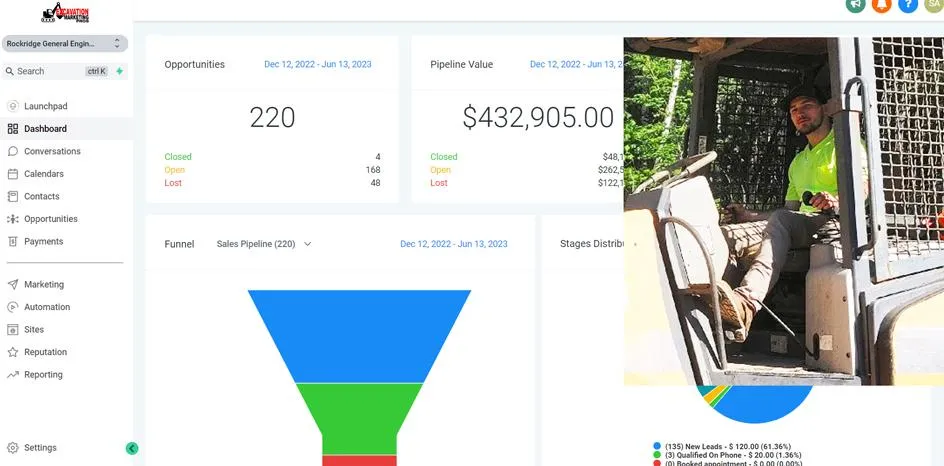
Raw lead count is a poor growth metric because it treats every inquiry as equal. A better dashboard follows the opportunity through the business. Track the source of the lead, the requested service, response time, qualification decision, estimate appointment, proposal outcome, booked revenue, gross profit, and customer outcome.
This helps you see which marketing channels are producing the work you want. Google PPC may capture urgent demand. Local Services Ads may create ready-now calls. Meta can build awareness and create earlier-stage conversations. Reviews, referral partners, social media, and organic service pages can influence a homeowner long before the phone rings. The goal is not to declare one source perfect. It is to know which sources produce qualified, profitable work after your company has delivered it.
The same reporting helps septic and excavation contractors improve operations. If calls from a particular service page close well but take too long to reach an estimator, the process needs attention. If a campaign produces many leads outside the service area, the targeting needs work. If a certain project type sells well but creates poor margins in the field, job costing and scope control deserve a closer look.
The numbers do not replace judgment. They give the owner a clearer starting point for it.
Growth Should Create More Control, Not Less
The right kind of growth gives the company more control. The office knows how to respond. The estimator sees better-fit opportunities. The crew works from clearer scopes. Customers understand the next step. The owner has better information about which services, locations, and lead sources deserve more investment.
The wrong kind of growth does the opposite. It creates a louder phone, a fuller schedule, more moving pieces, and less confidence in what the business is actually earning. It turns the owner into the bottleneck and makes every new lead feel like another emergency.
Before you ask for more leads, ask whether your systems are ready to make good use of the leads you already have. Tighten intake. Protect response time. Give estimates a follow-up path. Define the work that fits. Track results through gross profit. Build capacity deliberately.
That is how excavation and septic contractors turn more opportunity into a stronger company instead of more chaos.
Send us a message today to find out how Excavation Marketing Pros can help your excavation or septic company build a lead, follow-up, and measurement system that supports profitable growth without overwhelming the team.













Facebook
Instagram
X
LinkedIn
Youtube
TikTok