


Why the right neighborhoods, a clear message, and job tracking matter more than cheap postage.
A cheap postcard becomes expensive when it lands at a house connected to city sewer.
That is the first mistake septic companies need to avoid with Every Door Direct Mail. The owner sees affordable postage, chooses a large area, and sends thousands of cards. The mailing looks impressive. But too many recipients have no reason to call.
The better question is not, “How many mailboxes can we reach?” It is, “Which neighborhoods contain enough appropriate customers to make this campaign worth running?”
EDDM can help an established septic company become more familiar in the areas it wants to serve. But the postcard is only one part of the system. Neighborhood selection, service relevance, phone response, scheduling, and job economics decide whether that visibility becomes useful work.
What EDDM Actually Does
Every Door Direct Mail, or EDDM, is a USPS service that lets businesses distribute eligible marketing pieces along selected postal carrier routes without buying a traditional individually addressed mailing list.
You choose routes through the USPS online tool. For a homeowner-focused campaign, you can select residential-only delivery rather than including business addresses. The tool also provides route-level information such as delivery counts, household income, household size, and age-related demographics.
Those filters help you compare neighborhoods. They do not identify individual septic owners, confirm maintenance needs, or tell you who is currently looking for service.
EDDM is primarily neighborhood saturation marketing. You are buying broad coverage in a selected area, not a list of homeowners who have raised their hands for help. That difference should shape your expectations and your budget.
Choose Septic-Relevant Neighborhoods Before Choosing Volume
Start with areas where your company already knows septic systems are common. Review your completed-job map, local service experience, and lawful public sewer or wastewater service information where available.
Look for carrier routes that overlap those areas. A rural address, a large lot, or a higher-income neighborhood can be a useful clue, but none proves that a specific home uses septic.
Some routes will contain a mix of septic and sewer properties. Others may include apartments, PO Boxes, or addresses that do not fit your campaign. Review the actual route information instead of assuming that selecting a ZIP Code reaches only the homeowners you want.
You cannot use EDDM's demographic filters to handpick septic-qualified homes within a route. USPS does provide do-not-deliver handling for customer-requested removals, but that is an opt-out process, not a septic-property targeting feature.
If suitable homes are too scattered across otherwise poor-fit routes, an individually addressed campaign built from a lawful, better-qualified property list may be a stronger option. EDDM is useful when the neighborhood fit is strong enough to justify broad delivery.
Market Where Your Crew Can Work Profitably
A route can contain plenty of septic properties and still be a poor choice for your operation. Long travel, difficult access, and limited dispatch capacity can turn new calls into expensive work.
Prioritize neighborhoods inside your strongest service area. Think about travel from the yard, disposal arrangements, vehicle access, and whether additional appointments can fit existing routes without creating chaos.
For pumping campaigns, nearby bookings may help reduce unnecessary travel when your office can coordinate them. That benefit is not automatic. The customer still needs appropriate service, and the schedule still has to work.
For repairs or inspections, choose areas where the job types fit your qualifications and equipment. More inquiries are not useful if most involve work you cannot perform or properties too far away to serve profitably.
Give the Postcard One Clear Job
A septic postcard does not need to explain your entire business. It needs to help a relevant homeowner understand why they might contact you and what happens next.
Choose a main service or customer need. A pumping campaign can help homeowners think about appropriate maintenance. A repair campaign can emphasize professional evaluation and clear options. An inspection campaign should explain the type of inspection you provide without implying that every property needs one immediately.
A simple headline might read, “Need a Dependable Local Septic Company?” A maintenance-focused version could ask, “Not Sure When Your Septic System Needs Service?”
Then explain the benefit in ordinary language: local service, a clear explanation of the work, and an easy way to ask about scheduling. Avoid implying that annual pumping is necessary for every system or using a frightening diagnosis you cannot support.
The offer should match the service. A pumping promotion should not quietly turn into a sales pitch for a major replacement as soon as someone calls.
Make the Company Easy to Recognize and Contact
Use a clear company name, a readable headline, and a real image of your crew or service truck when you have a suitable one. Relevant customer feedback can support trust if you have permission to use it and represent it accurately.
Keep the contact details large enough to find quickly. Include a phone number and a short, readable website address. A QR code can give smartphone users another route to a campaign page, but it should not be the only way to respond.
Explain the next step beside the contact information. “Call to discuss your service needs and appointment options” is clearer than a card covered with unrelated promotions.
Do not overcrowd the design with every service, every badge, and every possible benefit. A homeowner sorting mail should understand the message without studying the postcard like an estimate.

Use Offers That Protect Your Pricing
A discount is not required for a useful EDDM campaign. A recognizable local company, clear service information, and a convenient next step can be the reason someone keeps the card.
If you offer promotional pricing, define what is included. Tank volume, access, disposal requirements, locating work, and other conditions can affect the scope and price. A headline price that changes dramatically on arrival can damage trust.
Consider whether the offer helps your operation. A legitimate neighborhood scheduling window may help organize appointments, provided your office can actually deliver it. Do not invent limited availability or promise immediate emergency response you cannot support.
Avoid attracting bargain shoppers with an offer your normal jobs cannot afford. The goal is enough of the right work at a sustainable price, not a full calendar of appointments that barely cover costs.
Budget for the Campaign, Not Just Postage
The USPS postage rate is only one expense. Include design, printing, mailing preparation, delivery to the appropriate Post Office, tracking tools, and campaign management. Ask vendors what their quote covers and which charges remain separate.
Check current USPS pricing before committing. Do not build a recurring budget around a rate you found in an old article or a quote that excludes printing and preparation.
Here is a hypothetical example, not a typical-price or response-rate claim. Suppose an all-in campaign costs $3,000 and reaches 5,000 mailpieces. If the average completed job collects $600 and costs $350 in direct delivery expenses, it leaves $250 before marketing and allocated overhead.
You would need twelve such completed, paid jobs to cover the $3,000 campaign expense. That is a 0.24% mail-to-completed-job rate, not a forecast. It is also not the same as the response rate, because not every caller qualifies or books.
At that point, the example only covers direct job costs and the campaign. It does not establish net profit after remaining overhead or taxes. Use your actual service mix and costs before deciding whether a mailing makes sense.
Prepare the Mailpiece Correctly Before Printing
EDDM Retail uses eligible USPS Marketing Mail flats. An ordinary small postcard does not automatically qualify. Confirm size, weight, layout, and postage-mark requirements using the current USPS tools or a printer experienced with EDDM.
USPS currently describes EDDM Retail as requiring at least 200 pieces and allowing up to 5,000 pieces per day per ZIP Code. Larger operations may use a different entry process, so have the mailing provider confirm the appropriate option.
Select the correct routes and delivery Post Office before finalizing quantities. The preparation process includes required documentation, bundles, and facing slips. Decide whether your printer handles these tasks or whether your team does.
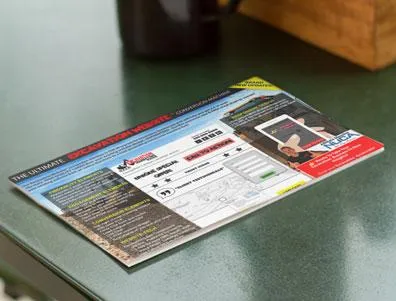
A blog illustration or attractive mockup is not a print-ready mailpiece. Review the actual production proof, contact details, landing page, and postal compliance before paying for a large run.
Plan Around Demand and Available Capacity
Start production before the period when you want more calls. Printing, preparation, and postal delivery take time, and a Post Office drop-off date is not a guaranteed household arrival date.
Choose the service message around local conditions. In some markets, pre-winter access and planning may matter. Elsewhere, rainy-season concerns or year-round maintenance demand may be more relevant. Do not copy another contractor's seasonal schedule without checking your own market.
EDDM is not an instant lead switch. Some recipients may respond quickly. Others may keep the card and contact you later when a need appears. That makes it useful for familiarity as well as immediate response, but it also makes tracking important.
A planned series of relevant mailings may be worth testing. Set a budget and review point rather than assuming repetition will eventually make an unprofitable route work.
Connect the Postcard to Your Office and CRM
Use a dedicated campaign phone number that routes into your normal intake process. Have a campaign page that matches the card's service message, with working forms and an easy click-to-call option.
Test the phone line, form, and QR code before printing. Make sure the office knows which offer is active, what questions to ask, and how to identify a postcard inquiry.
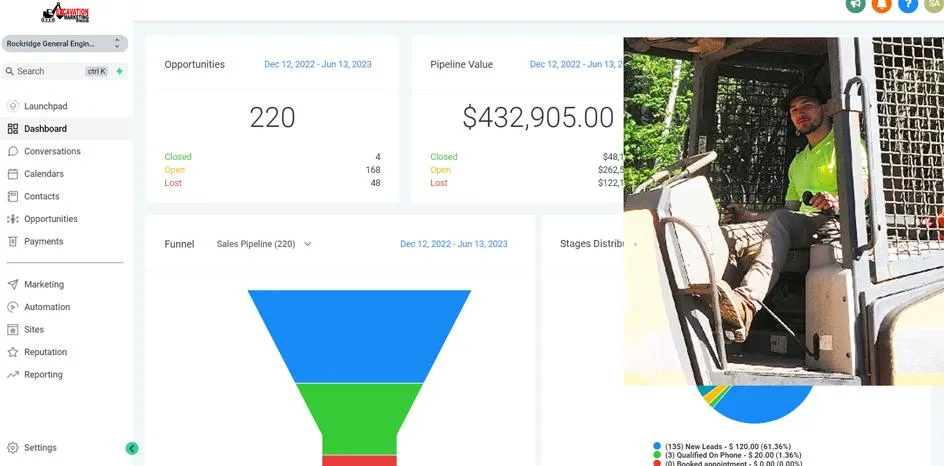
When the call arrives, confirm the service address, system concern, decision-maker, timing, and job fit. Record the campaign in your CRM and move a qualified opportunity toward an appointment or current estimate.
A postcard cannot compensate for unanswered calls or vague follow-up. If your company is too busy to handle the replies, fix intake before increasing the mailing volume.
Judge the Mailing by Jobs and Contribution
Track calls, qualified opportunities, appointments, sold work, completed jobs, and collected revenue. Compare those results with campaign spending and the direct cost of delivering the work.
Keep route selections, mailing dates, and creative versions in your campaign record. Separate route groups with distinct tracking when practical. If everything uses the same number and page, you cannot reliably claim which route performed best.
Attribution will not be perfect. Someone may read the postcard and later search your company on Google. Dedicated numbers, campaign URLs, and intake questions provide useful signals, but they do not prove that every returning customer was caused by the mailing.
Keep an appropriate window for delayed responses and compare with similar areas or periods when possible. Do not judge success by mailed volume alone, and do not treat every phone call as a booked job.
Make EDDM Part of a Local Marketing System
Start with a manageable group of well-matched routes, one clear service message, and a defined spending limit. Review the jobs you actually won before expanding.
EDDM can work alongside Google visibility, reviews, and digital advertising. A homeowner who recognizes the company from a postcard may later look you up and evaluate your reputation. The message and service area should be consistent across those touchpoints.
For excavation and septic contractors, the principle is the same: familiarity matters most when it reaches the right customer and connects to a professional sales and service process.
The best EDDM campaign is not the one that reaches the most mailboxes. It is the one that reaches enough appropriate homes, earns relevant conversations, and produces work your company can deliver profitably.
Send us a message today to find out how Excavation Marketing Pros can help your septic company plan targeted local campaigns, improve lead intake, and track which marketing turns into completed jobs and revenue.












Facebook
Instagram
X
LinkedIn
Youtube
TikTok