

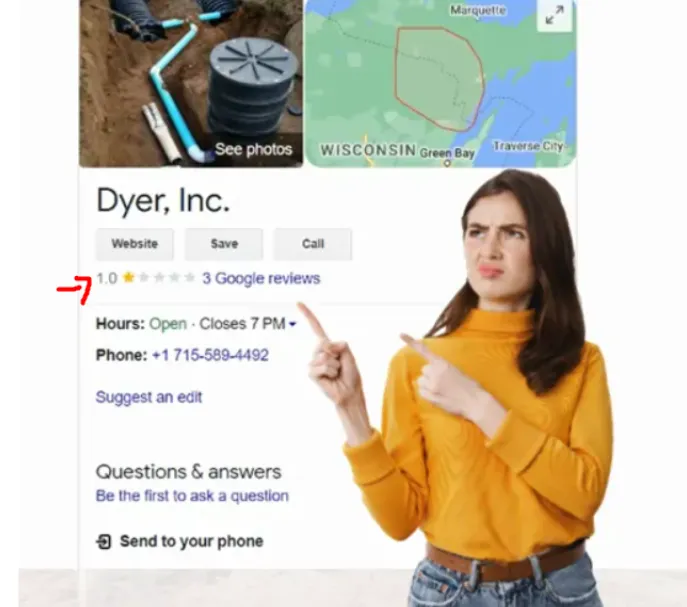



If you are an excavation or septic contractor and your marketing feels like it is not working, you are not alone. Most contractors in this industry are spending money on ads, paying agencies for monthly reports full of impressions and clicks, and still wondering why the phone is not ringing with the right jobs. The truth, according to Scott Andreasen of Excavation Marketing Pros, is blunt: most contractors do not have a lead problem. They have a visibility, trust, tracking, and follow-up problem.
In this in-depth training session, Scott walks excavation and septic contractors through the exact system he uses to help clients dominate local search, convert more of the right leads, and finally connect their marketing spend to real revenue. If you have ever felt like your marketing dollars are disappearing into a black hole, this is the session that will change how you think about your entire business.
Why Contractor Marketing Feels Completely Broken
The frustration most contractors feel is real, but it is usually misdiagnosed. The problem is not that there are not enough people searching for excavation and septic services in your area. In fact, 1 in 5 U.S. households relies on a septic or decentralized wastewater system. The market is enormous. The problem is that most contractor websites and marketing strategies are built to look busy rather than to convert buyers.
Scott breaks the issue down into four core gaps: visibility (can buyers find you for the right services in the right areas?), trust (does your online presence prove you are the right choice?), tracking (do you know which marketing channels are actually producing booked jobs?), and follow-up (are leads dying in your intake process before they ever become revenue?). Fix all four, and the phone starts ringing with better jobs at better margins.
The Problem with Treating Every Septic Lead the Same
One of the most expensive mistakes excavation and septic contractors make is treating every lead as if they have the same intent. A homeowner calling about a $300 septic pump-out has a completely different mindset than someone planning a $15,000 new septic system installation. A buyer searching for emergency drainage repair is in a different stage than someone researching land clearing for a new build.
When your website, your ads, and your intake process treat all of these buyers the same way, you are leaving serious margin on the table. Scott's framework starts with identifying your highest-profit service categories and building separate, targeted pages for each one - pages that speak directly to the buyer's specific concern, answer their most common questions, and make the next step obvious. This is where the money is for excavation and septic contractors who want to grow.
How AI Is Changing Local Search - And What to Do About It
The search landscape is shifting faster than most contractors realize. Google is no longer just a list of blue links. It is becoming what Scott calls an "answer environment," where AI-powered overviews pull information directly from websites and present it to users without them ever clicking through. This shift - from Search Engine Optimization (SEO) to Answer Engine Optimization (AEO) - changes what it means to be visible online.
The good news is that you do not need special AI code or expensive technical upgrades to compete. What you need is clarity. Your website must clearly state what you do, where you do it, and why you are the trusted choice - without marketing fluff. Answer the questions buyers are actually asking: What does it cost? How long does it take? What is the process? What problems might come up? Contractors who answer these questions specifically and honestly are the ones Google and AI tools will surface first.
The Local Authority Stack - 4 Layers That Drive Rankings
Scott's Local Authority Stack is the core framework that separates contractors who dominate local search from those who stay invisible. It is built in four layers, and skipping any one of them creates a gap that competitors will exploit.
Layer 1 is your Google Business Profile. This is your most powerful free tool, and most contractors are not using it correctly. Your primary category must be accurate. Your services must be specific - not generic labels like "excavation" but detailed entries like "septic system installation," "drainage correction," and "land clearing." Real photos of your crews, trucks, and completed jobs in your service area are far more powerful than stock photography.
Layer 2 is your high-profit service pages. Do not hide all of your services under one generic page. Separate them by buyer intent. A buyer looking for septic repair has different questions than a buyer planning a new installation. Give each service its own page with proof, photos, FAQs, and a clear call to action.
Layer 3 is your service-area signals. Show Google and buyers exactly where you work. Name the specific counties, towns, and rural areas you serve. Use local project photos that show the actual terrain and conditions in your area. Avoid the old SEO trick of creating thin, copy-paste city pages - that approach no longer works and can actually hurt your rankings.
Layer 4 is your reviews and reputation. A 5-star rating with no text is okay. But a review that says "Scott's team did a great job on our drainage correction in Rock Island County" is a massive signal to Google's local ranking algorithm. The best reviews mention the job type, the location, the timeline, and the experience. Build a system to consistently ask for this kind of detailed feedback from every satisfied customer.
Where Good Leads Die - The Conversion Leaks Killing Your ROI
Here is a hard truth that most marketing agencies will never tell you: the best SEO in the world will not generate ROI if your intake process is broken. Scott calls these "conversion leaks," and they are where good leads go to die.
The most common leaks are unanswered calls during fieldwork, an office that cannot separate urgent from non-urgent requests, estimate requests that sit overnight without follow-up, and no system for re-engaging leads that did not book on the first call. The 5-minute rule is real: if a lead is not contacted within 5 minutes of reaching out, the odds of them moving on to a competitor jump into the 90th percentile. Speed to lead is not a nice-to-have for excavation and septic contractors. It is a revenue issue.
Stop Tracking Vanity Metrics - Start Tracking What Pays the Bills
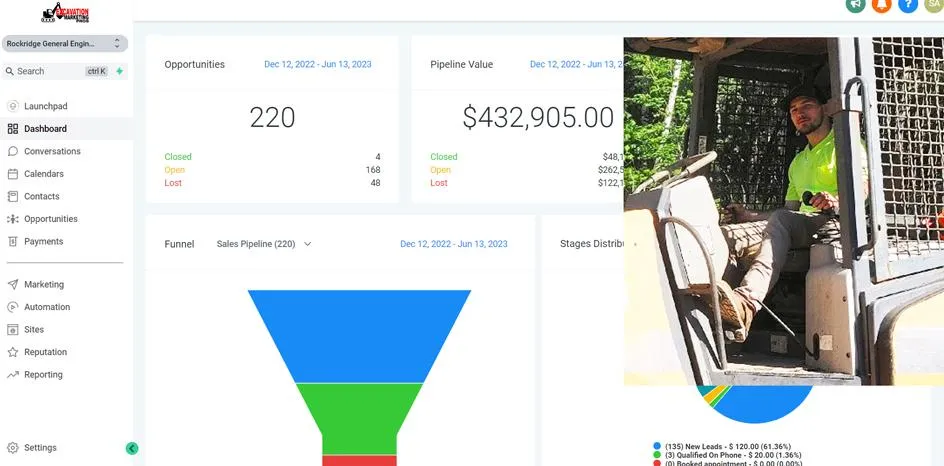
One of the most important mindset shifts Scott covers is the difference between vanity metrics and business metrics. Impressions, clicks, website traffic, and social media likes are vanity metrics. They feel good on a report, but they do not pay your crew. Business metrics are qualified calls, booked estimates, sold jobs, gross profit per job, and Cost Per Sold Job.
Scott walks through a simple ROI example that every contractor should internalize: if you spend $2,500 on an agency and $2,500 on ad spend ($5,000 total), and your average gross profit per install is $5,000, your break-even point is just one job. Profit begins on job number two. The goal is not cheap leads. The goal is profitable opportunities that close. A $40 lead that never buys is expensive. A $500 lead that turns into a $15,000 job is cheap.
The 90-Day Search System Plan
For contractors ready to build the system from the ground up, Scott lays out a clear 90-day roadmap. The first 30 days are about foundation: audit your Google Business Profile, fix your tracking, confirm your highest-profit service areas, and build a review request process. Days 31 through 60 are about authority: improve your core service pages with proof and photos, add answer-first content around high-value services, and start asking for better reviews consistently. Days 61 through 90 are about optimization: review call recordings for lead quality, compare booked estimates by source, and adjust your intake and follow-up based on where opportunities are actually leaking.
This is not a quick fix. It is a system - and systems compound over time. Contractors who build this foundation are the ones who stop chasing leads and start attracting them.
Is Your Excavation or Septic Business Hitting the Same Ceiling?
If you recognize your business in any part of this training - the frustration with marketing that does not convert, the leads that go cold, the agency reports full of numbers that do not connect to revenue - then you already know what the next step is. The contractors who win in local search are not the ones with the biggest budgets. They are the ones with the clearest systems.
Excavation Marketing Pros works exclusively with excavation and septic contractors to build exactly this kind of local search system - one that connects visibility to booked work and booked work to real profit. Send us a message today to find out how Excavation Marketing Pros can help your excavation or septic contracting business stop guessing and start growing. Visit excavationmarketingpros.com/schedule to book a strategy session, or access free tools and training at excavationmarketingpros.com/quicklinks.













Facebook
Instagram
X
LinkedIn
Youtube
TikTok