



Your next excavation customer may be staring at a flooded backyard right now. But if your marketing only says “excavation services,” they may never realize you are the contractor they need.
They are not shopping for an excavator. They want the standing water gone. They want a driveway that does not wash out every time it rains. They want to stop watching soil disappear downhill and wondering what the next storm will cost them.
That is the opportunity many excavation contractors overlook. They advertise what they do, while homeowners search for the problem they need solved.
Drainage work connects those two things. French drains, swales, culverts, grading, and erosion control become easier to market when you lead with the homeowner’s frustration, show evidence of your work, and make the next step clear.
You do not need to convince homeowners they have a drainage problem. You need to show them why your company is the right one to assess it and fix it.
Start With the Problem, Not the Machine
Drainage problems are easy to recognize but harder for homeowners to diagnose. Water remains after rain. Gravel disappears from a driveway. Soil washes downhill. A low spot never dries enough to mow. These situations give your marketing a practical starting point.
Describe the symptoms in your ads and website copy before naming the solution. “Help for recurring backyard flooding” makes the service relevant immediately. Then explain how your assessment determines whether grading, a swale, drainage piping, or another approach makes sense. Sell a competent evaluation, not a predetermined fix.
Market French Drains Without Making Them the Answer to Everything
Some homeowners arrive asking specifically for French drain installation because they have researched it or received a recommendation. Others only know their yard stays wet. Your marketing should serve both without promising the same installation for every property.
Explain that French drains can collect and convey water underground, but suitability depends on the site and an appropriate outlet. Use project examples to show why you selected that solution. Position your company as the contractor who investigates the problem before recommending construction, not the crew that sells a trench regardless of conditions.
Make Swales and Grading Understandable
Homeowners may not know what a swale is, but they understand water running toward the wrong place. Explain it as a shallow channel that guides surface runoff toward a suitable outlet. Describe grading in terms of reshaping the ground to improve drainage rather than simply “moving dirt.”
Show how these services relate to standing water, wet side yards, or runoff across a lawn. Be clear that redirecting water must respect property boundaries, local requirements, and downstream impacts. Moving a problem onto the neighbor is not a successful drainage project.
Give Culverts and Driveway Drainage Their Own Message
A washed-out driveway creates a different buying situation from a soggy backyard. The homeowner may be worried about access, repeated gravel replacement, or water cutting across the entrance. Speak directly to that frustration.
Create content around driveway drainage repair, culvert installation, and culvert replacement where those services match your capabilities. Explain that pipe condition, flow capacity, grading, access, and road authority requirements may affect the scope. Avoid advertising a universal culvert price when the site and approval process can change the economics.
Address Erosion and Foundation Concerns Responsibly
Erosion marketing should show more than fresh stone. Explain the water source, the damaged area, and how the proposed work addresses runoff and stabilization. A homeowner needs confidence that you understand why the soil keeps disappearing.
Water around a foundation requires particular care. Promote the drainage assessments and grading services you actually provide, but do not claim to diagnose every basement leak or structural issue. Bring in the appropriate specialist when needed. For excavation and septic contractors, also keep stormwater complaints separate from possible wastewater or septic system problems.
Use the Search Language Homeowners Understand
Useful keyword ideas include “yard drainage contractor,” “French drain installer near me,” “standing water in yard,” “driveway drainage repair,” and “erosion control contractor.” These are starting points to investigate, not a claim that every phrase has strong search volume in your market.
Use Google Ads search-term reporting, Search Console data, and actual intake conversations to refine the list. Separate homeowners seeking a contractor from people researching DIY instructions, materials, or equipment rental. Match each ad to the service you can perform and the local areas you can profitably serve.

Build Drainage Pages That Help Someone Decide
Do not send every drainage ad to a generic excavation homepage. Build a useful drainage service page explaining the problems you assess, the services you offer, your service area, and what happens after someone contacts you.
Include real project photos, relevant reviews, clear phone and form options, and practical answers about site visits, access, restoration, and estimates. Dedicated pages for French drains or culvert work make sense when you have enough genuine information to help customers. Avoid copying one thin page across dozens of towns. Local relevance should come from actual service knowledge and project proof, not repeated city names.
Show the Before, the Work, and the Result
Before-and-after photos help homeowners recognize their own problem, but a freshly restored lawn does not prove how drainage performs. Document the standing water or washout, the installation or grading work, and the finished property. When possible, capture follow-up footage after meaningful rain.
A short video can explain where the water came from and why the crew chose a particular approach. Obtain permission before filming private properties, protect customer information, and describe the conditions honestly. Specific explanations are more persuasive than claiming every project permanently eliminates all water problems.
Use Google Business Profile and Social Media Differently
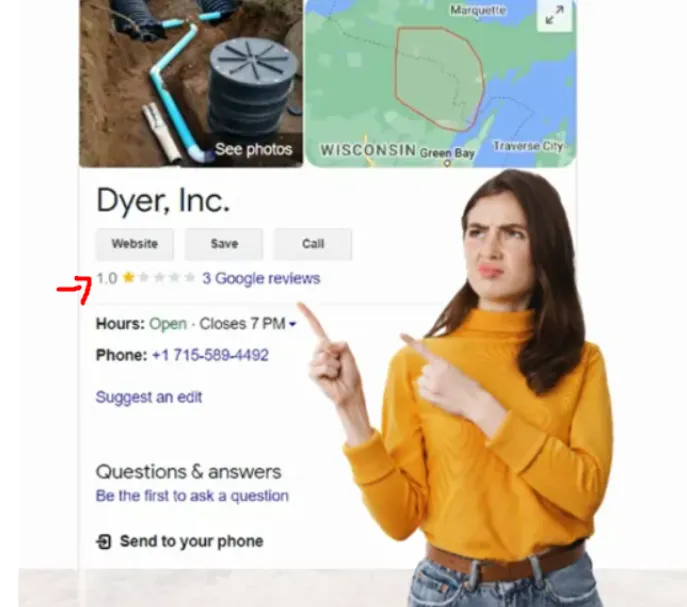
Keep your Google Business Profile accurate, with appropriate business categories, drainage services you genuinely offer, current contact information, and recent project photos. Request honest reviews after completed work without making rewards conditional on positive feedback. Profile activity supports a useful local presence, but does not guarantee rankings.
Facebook and Instagram can introduce the problem before a homeowner actively searches. Share a driveway washout explanation, a brief grading walkthrough, or footage showing a drainage correction after rainfall. Paid local campaigns can amplify strong examples. Start with a serviceable area and a clear next step rather than a broad promise to fix every wet yard.
Qualify the Job Before Sending the Estimator
Ask for the property address, photos, when the problem occurs, and how long water remains. Find out whether the owner wants professional construction or only a quick patch. Discuss access, timeline, and your normal project scope before booking a visit.
Your office should also ask about previous drainage work and known utilities or septic components. Photos help triage the inquiry, but do not replace an on-site assessment. Explain any assessment fee or minimum project requirement upfront. Good qualification protects estimating time while giving the homeowner a professional, helpful experience.
Choose Profitable Projects, Not Just Bigger Invoices
Drainage profitability depends on mobilization, excavation conditions, materials, trucking, disposal, restoration, permits, and the risk of callbacks. A compact project near an existing job can be attractive. A larger project with difficult access and an uncertain outlet can consume the margin.
Look for opportunities to include related work when it genuinely improves the property, such as driveway repair, regrading, erosion stabilization, or site preparation. Scope and price each component clearly. Do not add work simply to inflate the ticket, and do not quote by pipe length alone when most of the cost sits elsewhere.
Avoid the Mistakes That Waste Good Demand
Common mistakes include buying clicks across an oversized territory, advertising services the crew cannot deliver, and using dramatic flooding photos without explaining the actual offer. Another is promising immediate availability during storms when calls already exceed office capacity. A clear booking window is better than a disappointed homeowner.
Keep campaigns focused enough to measure. Separate drainage inquiries from unrelated demolition or land clearing requests. Review irrelevant search terms, check missed calls, and make sure mobile visitors can request help without completing a lengthy form.
Track the Work You Want More Of
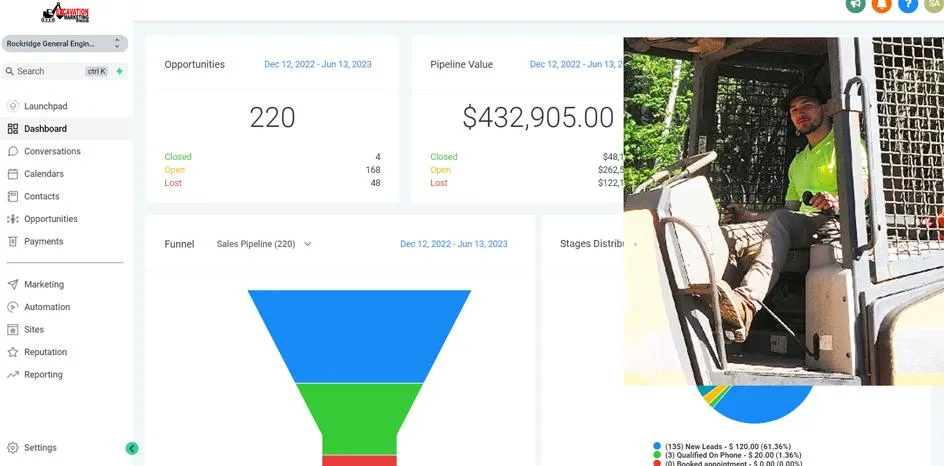
Record lead source, drainage problem, location, qualification outcome, estimate value, sold job, and collected revenue in your CRM. Compare channels by qualified opportunities and profitable completed work, not just cheap form submissions. Review lost estimates to see whether targeting, budget expectations, or response time needs improvement.
Give every unsold estimate a next action. Send the written scope promptly, confirm the homeowner received it, and ask what is preventing a decision. If weather or timing caused a delay, record a follow-up date. Reaching back out with a relevant project example is more useful than repeatedly asking whether they are ready to buy.
Keep gathering project proof and following up before the next wet-weather period. That gives your company something more dependable than waiting for a storm and hoping the phone rings.
Use a monthly review to decide which drainage services deserve more budget, which areas create too much travel, and whether your crew has capacity for the next round of qualified estimates.
Send us a message today to find out how Excavation Marketing Pros can help your excavation company market drainage services, attract better-fit homeowners, and connect your marketing to estimates, completed jobs, and real revenue.












Facebook
Instagram
X
LinkedIn
Youtube
TikTok