



If you are a septic contractor, you are sitting on a goldmine right now and you might not even know it. Every past client in your database - every pump-out, every inspection, every service call you have ever run - represents a future revenue opportunity that most contractors completely ignore. In this full training, Scott Andreasen from Excavation Marketing Pros breaks down the exact system to wake up that dormant list and turn it into predictable, recurring revenue without spending a dollar on new advertising.
The Problem: Your Client List Is Collecting Dust
Most septic and excavation contractors do a great job of completing the work, but a poor job of staying in front of past clients. Once the job is done, the customer gets filed away in QuickBooks, Jobber, Housecall Pro, or Joist - and then nothing. No follow-up. No outreach. No reminder that their system is due for service again.
The result is that your competitors are calling your past clients and booking the work that should have been yours. The fix is not more advertising - it is a simple, automated reactivation system built around the list you already have.
Step One: Export and Clean Your List
The first step is to pull your client data from whatever system you use. You need six key data points: client name, site address, phone number, email address, type of service performed, and the date of the last invoice. That last field is critical - it tells you exactly who is overdue for service and who is the most likely to say yes to a follow-up offer.
Once you have the list exported, you need to clean it. The biggest issue most septic contractors run into is that their list contains a mix of landlines and cell phone numbers. Since this system relies heavily on SMS text marketing, you need to identify and separate the cell phones. Texting a landline is a wasted message - and in bulk, it can hurt your sender reputation.
Step Two: Build a 5-Column Sales Pipeline
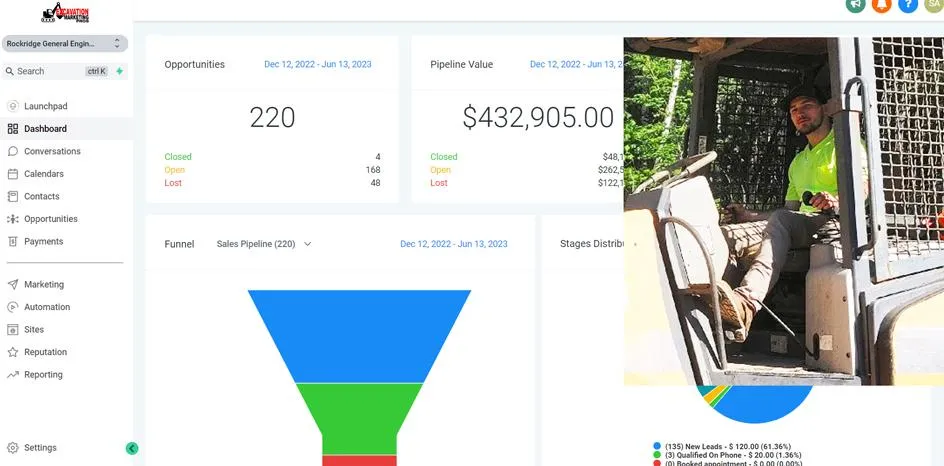
Before you send a single message, you need a system to track where every lead stands. Without a pipeline, your team will get flooded with replies and have no idea who to call, who already booked, and who said no. Scott recommends a simple 5-column CRM pipeline specifically designed for this type of reactivation campaign.
Column one holds your raw client list. Column two is for confirming the client still lives at the property with the septic system - people move, and you do not want to offer a pump-out to someone who sold their house two years ago. Column three captures everyone who said yes to the offer. Column four marks the converted appointments and closed sales. Column five is your exit column - for anyone who does not respond after three or four attempts, you move them out and stop burning resources on them.
Step Three: Automate the Outreach
This is where the system does the heavy lifting for you. Instead of having your office admin manually call through a list of thousands, you use automated text and email sequences to do the initial outreach at scale. The key is to keep the first message soft - you are not selling anything yet. You are simply confirming they still live at the address and planting a seed.
The script that works is simple and conversational: "Hey [Name], we are going to be in your area soon doing some routine inspections and pumping. While we are there, would you like us to stop by and check out your system?" That is it. No hard pitch. No price. Just a friendly, low-pressure nudge that gets people to raise their hand.
When a client replies with a yes - even something as casual as "Sure" or "How much?" - the AI reads the response and automatically moves them into the interested column. Your team then gets a notification to make a live follow-up call and close the deal.
Step Four: The Human Follow-Up Call
Automation gets the hand-raise. A real person closes the sale. Once a client has expressed interest, your office admin or sales rep calls them with a simple, direct opener: "Hey, I just got your message that you want us to have someone stop by while we are in your service area - is that right?" From there, the conversation flows naturally into booking the appointment.
Scott strongly recommends having a written call script and a list of rebuttals ready before your team starts making calls. Role-play the script with your staff so it sounds natural, not robotic. The difference between a well-prepared call and a winging-it call is the difference between a 20 percent close rate and a 60 percent close rate.
One critical warning: do not blast your entire list of 10,000 contacts on day one. Start slow, test the system, and scale up as your team gets comfortable handling the inbound responses. Burning your list with a poorly executed mass send is one of the fastest ways to damage your sender reputation and overwhelm your staff.
Is Your Septic Business Ready to Activate Its Hidden Revenue?
Every excavation and septic contractor has a list. Very few have a system to monetize it. The contractors who build this reactivation process into their operation stop relying on slow seasons and start generating revenue on demand - from clients who already know them, trust them, and are statistically likely to need service again.
Send us a message today to find out how Excavation Marketing Pros can help you build this exact system for your septic or excavation business and start turning your client list into predictable monthly revenue.













Facebook
Instagram
X
LinkedIn
Youtube
TikTok