


A septic company does not need more articles sitting on a website that nobody reads. It needs useful local content that helps the right homeowner find the company, understand the problem, and feel confident enough to make the call.
That distinction matters. Established septic contractors already know the work. They understand pumping schedules, repairs, inspections, drainfield issues, system replacements, difficult access, and the uncertainty a homeowner feels when something is wrong underground. The marketing opportunity is to turn that working knowledge into content that answers the questions customers ask before they contact a company.
When a homeowner searches for help, they are rarely looking for a lesson in SEO. They are trying to figure out whether a smell means trouble, whether a failed inspection can be repaired, how often their tank needs service, what a drainfield problem looks like, or which contractor can handle a replacement without turning their property into a mess. Content that directly addresses those concerns can create visibility, trust, and better calls before your office ever picks up the phone.
The goal is not to publish more for the sake of publishing. The goal is to make your septic company the useful local answer for the services you want more of.
Start With the Questions Homeowners Ask Before They Call
Most good septic content begins with a question your office, technicians, or estimators hear repeatedly. Think about the calls that start with, “My yard is wet. Could this be my septic system?” or “The buyer’s inspection found a problem. What happens now?” Those are not just calls. They are the language of demand in your market.
A homeowner may search for how often a septic tank should be pumped, what causes a septic odor, signs of drainfield failure, what a septic inspection means, whether a system can be repaired, or what to expect during a replacement. Each question points to a stage in the customer’s decision. Some people need routine service. Some need reassurance. Some are comparing contractors for a major project and need proof that you understand the work.
The best content does not talk down to homeowners or bury the answer under technical language. It explains the issue clearly, describes when professional help is appropriate, and makes the next step easy. That is how educational content becomes lead generation instead of an online textbook.
Focus Content on the Services You Want More Of
A septic company can write about almost anything related to onsite wastewater systems. That does not mean every topic deserves equal attention.
Start by identifying the services that fit your business goals. You may want more system replacements, drainfield repairs, inspections, pumping routes, septic repairs, new construction installation, or excavation-related site work. Each of those services has different customer questions, different lead value, and different sales cycles.
For example, a company that wants more profitable repair and replacement work should build content around the problems that lead homeowners to those services. A guide about signs of a failing drainfield, a page explaining what happens after a failed inspection, a case story about restoring a difficult property, or a service page for septic system replacement can all support that goal.
This approach is more useful than chasing broad page views. A thousand visitors looking for a do-it-yourself answer may not create one good opportunity. A smaller number of local homeowners researching septic replacement, repair, or inspection issues can create conversations your team is equipped to convert.
Content should support the work you want your crews, estimators, and office to be doing six months from now.
Build More Than Blog Posts
Many owners hear “content marketing” and picture a stream of generic blog articles. Blog posts can help, but they are only one part of a strong septic content strategy.
Your most important content is often your service pages. A septic repair page should explain the types of issues you address, the signs a homeowner may notice, how your process works, and how to request help. A system replacement page should show that you understand permits, access, existing-system conditions, restoration, and the stress of making a major property decision. An inspection page should explain why the inspection matters and what homeowners should expect next.
Location pages can help when they are genuinely useful. They should reflect the areas you serve, the types of properties you work on, and the common local situations customers face. They should not simply repeat the same paragraph with different town names inserted. Search engines and homeowners both recognize thin, copied content.
Helpful FAQs, project breakdowns, homeowner guides, review-supported pages, photo galleries, and Google Business Profile updates all reinforce the same message: your company has real experience solving real septic problems in the local market.
Use Local Language Instead of Generic SEO Phrases
Homeowners do not always use the terminology your crew uses. One person may search for “septic smell in yard.” Another may search for “wet spot over septic tank,” “failed septic inspection,” or “drainfield repair near me.” Good content bridges homeowner language and professional service language.
Pay attention to the words customers use when they call, email, leave reviews, or describe a problem during an estimate. Look at the phrases that bring visitors to your website. Check questions from your Google Business Profile and the search suggestions that appear when you start typing a local septic issue into Google. These are clues to the content your market actually needs.
Use your service area naturally. Explain where you work, show local property conditions when relevant, and make your contact information consistent across the site and your Google Business Profile. But do not force city names into every sentence. A useful local page reads like it was written by a contractor who understands the area, not by software trying to repeat a keyword.
The objective is relevance. A homeowner should recognize that you serve people like them, handle the kind of problem they have, and are easy to contact.
Turn Real Jobs Into Content Assets
One completed septic project can create more than one marketing asset. A system replacement, repair, drainfield correction, or difficult inspection issue may become a short project story, a before-and-after photo set, an FAQ, a Google Business Profile post, a service-page example, a social post, and an educational article.
That does not mean exposing a customer’s private information. It means documenting the work professionally. Show the type of property challenge, explain the scope in homeowner language, describe what your team did, and show the finished outcome when appropriate.

Project-based content is powerful because it is difficult to fake. It demonstrates experience. A homeowner can see that you have handled a similar problem. Your estimator can point to it during a sales conversation. Your office can use it to answer a prospect who is uncertain about disruption, access, restoration, or the next step.
For excavation and septic contractors, real project proof also helps separate your company from the lowest-price option. You are not just offering a machine or a service call. You are showing a documented process, property awareness, communication, and a completed result.
Make Every Page Build Trust Before the Phone Rings
Content should reduce uncertainty. Before someone calls a septic company, they are asking themselves whether the company is legitimate, whether it serves their area, whether it understands the work, whether the team will communicate, and whether they can trust the company on their property.
Your content answers those questions with proof. Use real reviews in the right places. Put relevant photos next to the services they support. Explain the process in plain language. Give a clear view of what happens after a homeowner calls or submits a form. Show your crew, equipment, projects, and local experience where appropriate.
A good page also makes it clear that there is a professional answer without trying to diagnose every problem online. For example, an article about septic smells can explain common causes and the reasons to schedule an evaluation, then direct the reader to call your office. That is helpful content with a clear business purpose.
Trust is especially important for major repair and replacement work. A homeowner may be considering a substantial investment, dealing with a failed inspection, or trying to avoid a larger property problem. Specific, calm, useful content helps your company look like the safer choice before the estimate is even requested.
Connect Your Website, Google Business Profile, Reviews, and Photos
Local visibility is not created by one blog post. It is built when your website, service information, reviews, photos, and Google Business Profile all support one another.
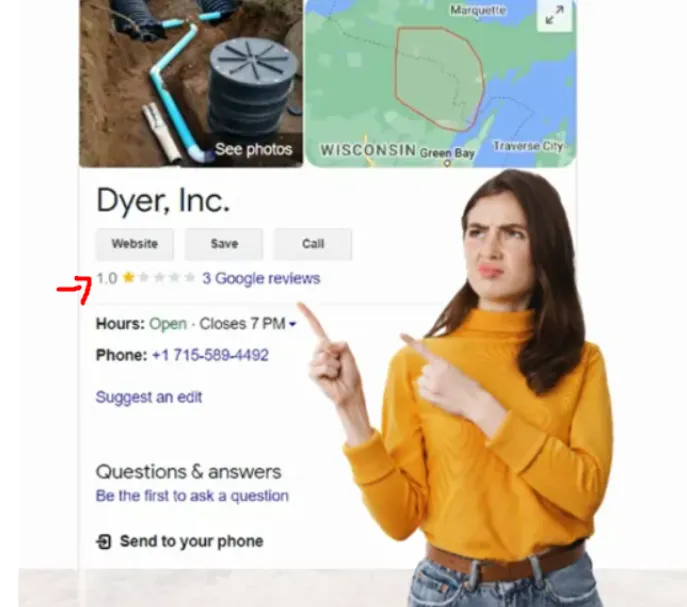
Your Google Business Profile should accurately reflect the services you provide, the areas you serve, the hours your office can respond, and the evidence that you are active in the market. Fresh project photos, honest customer reviews, and useful updates give homeowners more reasons to choose you. Your website gives them the detailed information they need when the profile is not enough.
Content creates a bridge between the two. A homeowner may discover you through a Google search, check your reviews, visit a service page, look at a project example, and then call. The channels work together. When the messages are consistent, the prospect has fewer reasons to keep searching.
This is also why reviews matter beyond reputation. A review that mentions clean work, responsiveness, clear communication, a difficult repair, or a successful replacement reinforces the specific service pages and content topics you want to rank for. Ask for reviews professionally after a positive completed job, then use the proof where it is relevant.
Write for Homeowners Without Sounding Generic
Septic work can get technical quickly. Homeowners still need clear answers. The best content explains the issue without pretending the reader can solve every problem alone.
Use plain words first. Explain a drainfield, baffle, inspection, pump, or replacement process in a way a homeowner can understand. Then explain what a qualified contractor will evaluate and why the right answer depends on the property. This keeps the content useful while protecting against overpromising.
Avoid empty marketing statements that could appear on any contractor website. “Quality service” and “customer satisfaction” do not tell a homeowner why you are right for a failed septic inspection or a property with drainage concerns. Specific guidance does.
You can be educational and persuasive at the same time. Explain the signs, the options, the process, and the next step. Then invite the homeowner to contact a company that handles this work every day.
Avoid the Content Mistakes That Keep Good Companies Invisible
The most common mistake is publishing thin articles that have no clear connection to the services you sell. A generic post about home maintenance may attract some traffic, but it will not necessarily help a septic company earn a system replacement, repair, inspection, or pumping customer.
Another mistake is keyword stuffing. Repeating the same town, phrase, or service name over and over makes the page worse for the reader and rarely builds lasting visibility. Search engines increasingly reward pages that are genuinely useful, clear, and supported by real expertise.
A third mistake is letting generic AI content replace real field knowledge. AI can help organize ideas, but it cannot replace your experience with local soils, property access, permit requirements, seasonal conditions, common system failures, or the questions your customers actually ask. Your best content begins with that real insight.
Finally, do not measure success only by page views. A page that gets less traffic but produces several qualified calls may be far more valuable than a broad article that attracts readers who will never hire a septic contractor.
Measure Calls, Leads, and Revenue, Not Just Traffic
Content becomes a business asset when you track what happens after someone finds it. Review which service pages receive organic visits, which blog topics bring in local search traffic, which pages lead to calls or estimate forms, and which of those opportunities turn into booked work.
Your CRM, estimating system, or even a simple lead tracker can help capture the source, service requested, response time, estimate amount, and final result. Over time, that information tells you which topics and pages deserve more attention.
Maybe a page about failed septic inspections produces high-value repair opportunities. Maybe project stories about drainfield work build trust with homeowners who are comparing companies. Maybe a pumping guide brings repeat-service calls and more review requests. The pattern matters more than vanity metrics.
This is where a content strategy becomes a local lead-generation system. You create useful pages around the services you want. You connect them to reviews, photos, local visibility, and clear calls to action. Then you track which content produces the right conversations.
Build a Content System That Keeps Working After You Publish
A strong septic content strategy is not a one-month campaign. It is a library of useful local assets that can keep helping homeowners find and trust your company over time.
Start with your core services. Improve the pages that already exist. Add answers to the questions your office hears every week. Document the right completed jobs. Publish a useful article when there is a clear topic connected to a real service. Reuse the information in your Google Business Profile, review process, email follow-up, and social media.
The result is not random SEO content. It is a system that makes your experience visible. It gives homeowners better answers, gives Google a clearer picture of your company, and gives your office more opportunities to earn qualified local calls.
If your septic company has the experience but your website does not yet show it, send us a message today to find out how Excavation Marketing Pros can help you build a content strategy that turns helpful information into better local visibility, stronger trust, and more profitable septic work.













Facebook
Instagram
X
LinkedIn
Youtube
TikTok