
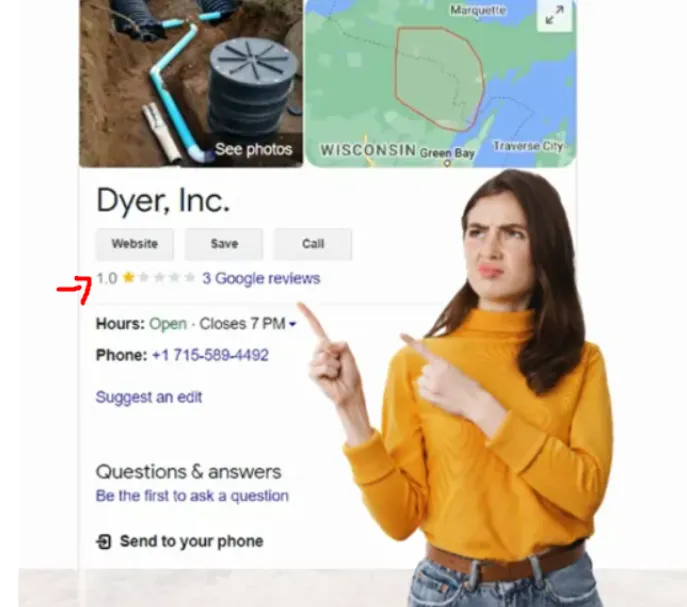


A septic company can do excellent work for years and still lose calls to a less capable competitor with a stronger Google Maps presence. The reason is simple. When a homeowner searches for septic pumping, septic repair, a failed drainfield, an inspection, or a replacement, Google Maps is often where they make their first short list. If your company is missing, inaccurate, thin on reviews, or unclear about what it actually does, the homeowner may never reach your office.
For an established company, the goal is not to chase a magic ranking trick. It is to make it easy for Google and local homeowners to understand who you are, what septic work you perform, where you work, and why customers trust you. Google says local results are mainly based on relevance, distance, and prominence. You cannot pay Google to move an organic Maps listing higher, and no contractor controls the searcher’s location. You can, however, improve how completely and credibly your business is represented.
Why the Top Google Maps Results Matter for Septic Companies
The top Maps results place your company in front of homeowners who already have intent. They are not casually scrolling past an ad. They are trying to solve a problem, plan a service visit, compare local contractors, or decide who to call before an inspection, sale, or construction project.
That makes Maps visibility valuable for septic contractors with a real local reputation and a professional operating system. A strong listing supports emergency repair calls, planned pumping, inspections, replacement work, drainage, and site-prep opportunities. It also gives referrals and website visitors another proof point before they contact the office.
The important distinction is that visibility is not the same as winning every search. A homeowner in a neighboring town may see a different set of results than someone near your office. Your aim is to become the clearest legitimate choice for the services, geography, and job types you actually want.
What the Top Google Maps Results Actually Are
The top Google Maps results are the businesses Google chooses to show for a location-based search. A homeowner might type “septic pumping near me,” “septic repair in [city],” or “septic inspection company.” Google combines the intent in that search with the searcher’s location and the businesses it believes are the best local matches.
For septic work, those results usually lead a prospect to examine the Business Profile, photos, services, reviews, hours, call button, website link, and directions or service-area information. A polished profile does not replace good operations. It helps a homeowner see evidence of those operations before a conversation starts.
How Google Decides Which Septic Companies Show Up
Google describes three primary local-ranking factors: relevance, distance, and prominence. Relevance is how well your profile matches the search. Distance is how far the business is from the searcher or the location Google can infer. Prominence is how well known and trusted the business appears, including signals such as reviews and links from other websites.
This is why a complete profile matters. If your services, category, hours, website, phone number, and service area are vague or outdated, Google has less confidence about when to show you. It is also why an owner should be skeptical of anyone promising a guaranteed number-one Maps position. Google explicitly says there is no way to request or pay for better organic local ranking.
A smarter goal is to improve the inputs you control. Make the profile accurate. Give customers enough proof to choose you. Build a useful website that confirms the services and towns you serve. Then measure calls, website clicks, and booked work instead of obsessing over a single screenshot of a search result.

How to Optimize Your Google Business Profile
Start with the foundation. Verify the profile, then review every field as if a homeowner has never heard of your company. Use the real business name customers recognize. Keep current business hours, holiday hours, phone number, website, and service details. Make sure the main contact path reaches someone who can answer or return calls quickly.
Google says businesses with complete and accurate information are more likely to show in local search results. It specifically calls out complete information about address, hours, business type, and other profile details. For a septic company, that means the profile should not force a homeowner to guess whether you handle pumping, repair, inspection, replacement, or the locations you serve.
Write the profile description for a person first. Explain the main septic services, the markets you serve, and what makes your company dependable. Avoid stuffing city names or repeating keywords. Clear information earns more trust than a description that sounds written for an algorithm.
Choosing the Right Septic Services and Business Categories
Your primary category should describe the core business as accurately as possible. Google says the categories you select affect local ranking and recommends choosing the specific category that best describes the business rather than creating your own label.
That does not mean selecting every category that seems remotely related. Google’s business guidelines advise using the fewest categories needed to describe the overall core business. A pumping-first company should not pretend to be a full-site contractor if it does not perform that work. A septic and excavation company that legitimately handles both may need categories and services that reflect both sides of the operation.
Then build the services list around work you truly offer and want more of. Include plain-language service names that homeowners recognize. Use the same language your office uses when it qualifies a call. If you do not want tiny out-of-area jobs, do not build your profile around them just because the search volume looks attractive.
Why Reviews Matter for Google Maps Rankings
Reviews are both a ranking signal and a conversion asset. Google says that more reviews and positive ratings can help local ranking, while helpful replies can help a business stand out. For a septic owner, the best reviews do more than say “great service.” They show what it feels like to work with your company: quick response, clear communication, respect for the property, knowledgeable technicians, fair expectations, and a clean finish.
The right system is simple. Ask for a review after a successful job, when the customer has experienced the result. Give the office a repeatable link or QR code. Google allows businesses to share a review-request link or QR code, and verified businesses can reply to reviews.
Do not buy reviews, pressure unhappy customers, or offer incentives that distort feedback. The goal is a steady flow of honest proof. Respond to every review with professionalism. A calm, helpful reply to a difficult review can be as persuasive as a glowing five-star review because it shows future homeowners how you operate when something goes wrong.
How Photos and Job Updates Can Improve Your Local Presence
A septic profile should look alive. Use current, truthful photos of clean trucks, organized equipment, crews, pumping work, repair projects, site conditions where appropriate, completed restoration, and the people who answer the phone. Google encourages businesses to use photos and videos to show what they offer and tell the story of the business.
The strongest job photos answer a homeowner’s quiet questions. Does this company look professional? Do they own the right equipment? Do they work carefully around a home? Have they solved problems like mine? One useful photo set from a drainfield repair or septic replacement can support the profile, a service page, a social post, an estimate follow-up, and a future review request.
Update content when you have something real to show. Do not treat your profile as a daily social feed. A few meaningful project photos and updates each month are more useful than a pile of generic graphics. The point is continued proof, not noise.
Keeping Your Name, Phone Number, and Service Area Consistent
Your business name, phone number, website, and service geography should match the real-world business and remain consistent wherever homeowners find you. Google’s representation guidelines require accurate business information, accurate address and/or service area, and one profile per business.
Most septic contractors operate as service-area businesses or hybrids. If customers do not come to your address, Google says to remove the address from the profile and set an accurate service area instead. Google lets a business use up to 20 named service areas and recommends being specific and accurate, with an overall area generally no more than about two hours of driving time from the base.
Do not create fake locations or extra profiles in towns where you do not have a legitimate eligible location. They create risk, confusion, and a fragile strategy. Build visibility in the towns you can actually serve well.
How Your Website Supports Google Maps Visibility
Your Business Profile and your website should tell the same story. The profile may win the initial look, but the website gives a homeowner deeper proof. A fast, clear service page can explain what happens during pumping, repair, inspection, replacement, or excavation work. It can show reviews, project photos, financing options where applicable, service areas, and a simple way to call or request an estimate.
Your website also gives Google more context about relevance and prominence. Google notes that prominence is based in part on information such as how many websites link to your business. The practical response is not to chase random links. It is to publish useful local work, earn mentions from legitimate partners and community organizations, and create pages that deserve to be referenced.
Make sure the site makes it easy for a homeowner to move from research to action. Every important service page should have a click-to-call option, a focused form, and clear expectations about your response time and service area.
Creating Local Service Pages for the Areas You Want to Target
Build local service pages only for towns and areas you genuinely serve. Each page should offer something useful: the septic services available there, the types of properties or site conditions you commonly handle, examples of relevant work, the process for an estimate, and a clear contact path.
Do not create twenty nearly identical pages that only swap the city name. That does not help a homeowner choose you, and it creates thin content that is hard to maintain. A better approach is to prioritize the markets that produce profitable work, then create a page that answers the questions those homeowners actually have.
For example, a rural market page might explain pumping access, driveway considerations, inspection coordination, or replacement planning. A growing suburban market page may need more information about inspections, new-home construction, drainage, or system upgrades. The page should reflect the work and audience in that market, not just a keyword list.
How Often Should You Update Your Google Business Profile?
Update the profile whenever business facts change. Hours, phone routing, service offerings, website links, and service areas should be corrected immediately. Google advises keeping business information complete and up to date.
For ongoing visibility, set a practical rhythm. Review the profile once a month. Add new project photos when you have meaningful work to show. Reply to reviews as they arrive. Check that service descriptions still match the jobs you want. This does not need to become another full-time job. It needs to become part of your operating rhythm.
A useful monthly review is also a chance to confirm that the profile and the website are telling the same story. If you have stopped offering a service, remove the confusion. If a new crew is ready for more repair work or replacement work, update the assets that support that growth plan.
Common Mistakes That Hurt Google Maps Visibility
The most damaging mistakes are usually not sophisticated. They are outdated hours, a phone number that goes unanswered, a vague category, an inaccurate service area, duplicate profiles, thin photos, no review process, or a website that fails to confirm what the profile promises.
Another mistake is trying to turn the business name into a list of services and towns. Your name should match the name you use in the real world. Google requires an accurate representation of the business, and artificial keyword additions can create policy risk.
Finally, do not treat every lead as a ranking problem. If calls are up but estimates are weak, the issue may be qualification, service-area screening, speed to lead, or proposal follow-up. Maps visibility is valuable only when it produces work that fits your crews, margins, and schedule.
How to Track Calls and Leads From Google Maps
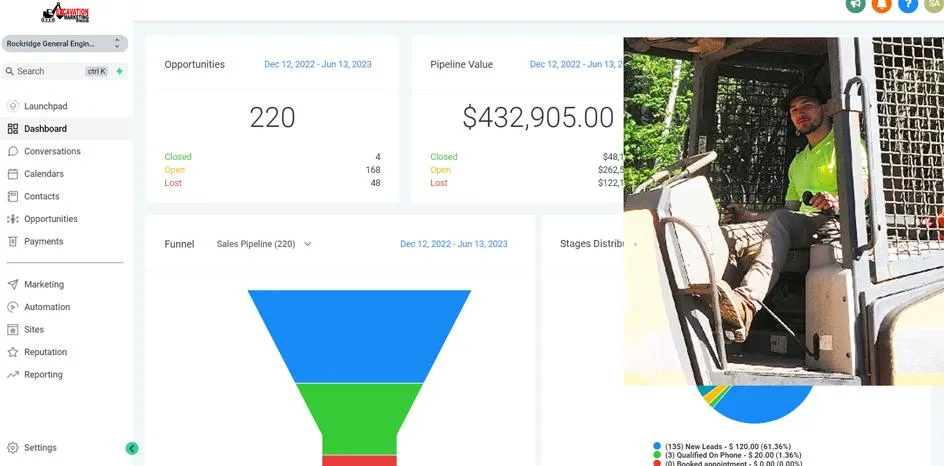
A verified Business Profile gives owners access to performance information about how people discover the profile and the actions they take on Search and Maps. Google says that managers can review views, clicks, and other customer interactions, choose a date range, and download performance data.
Use that data as the start of the conversation, not the final score. In your CRM or lead tracker, ask how the customer found you. Mark whether the lead came from Maps, a branded Google search, organic website traffic, referral, paid search, or another source. Record the service requested, town, response time, estimate value, close result, and revenue.
This is where established septic contractors gain an advantage. Instead of celebrating phone calls that create no profitable work, you can learn whether Maps produces better pumping routes, repair jobs, inspections, or replacement opportunities. You can then invest in the services and locations that fit your business rather than chasing broad activity.
What to Do If Competitors Keep Ranking Above You
Start with an honest comparison. Search from the towns you want to serve and look at the businesses a homeowner sees. Are their profiles more complete? Do they have more recent legitimate reviews? Do their photos show better project proof? Is their website clearer about the service? Are they physically closer to the search location? Distance is a real factor, so not every result is a problem you can solve.
Then improve the gap you can control. Tighten categories. Correct services. Build a stronger review rhythm. Add current photos. Improve the website pages for the work and areas that matter. Follow up with old customers. Answer calls faster. Document the jobs you want more of.
Do not tear down competitors in public or make every decision based on one ranking check. Maps results move by location, device, search wording, and time. Build a stronger local business presence, then measure whether it creates qualified calls and sold work.
Building a Long-Term Local SEO Strategy for Your Septic Company
A dependable Maps strategy is not one task. It is a system that connects accurate business information, real services, helpful website pages, reviews, project proof, timely follow-up, and lead tracking.
Choose the work you want more of. Make that work easy to understand on your Profile and website. Collect honest customer proof after every successful job. Keep your service area accurate. Use photos to show professional operations. Review lead quality and sold revenue by source every month. Over time, this creates the relevance and prominence that one-off optimization tricks cannot provide.
Your septic company does not need to become the biggest business in every town. It needs to become the clearest trusted option for the right homeowner at the right moment. If you want a Maps and local SEO system that supports better visibility, trackable leads, and profitable growth, send us a message today to find out how Excavation Marketing Pros can help your septic company build it.










Facebook
Instagram
X
LinkedIn
Youtube
TikTok