


A neighbor recommends your company. A homeowner sees your truck working down the road. Someone in a local group mentions your name. You have already earned enough interest for that person to look you up.
Then they search your company and find an old phone number, a Facebook page that looks abandoned, and a website that never clearly says whether you install septic systems or only pump them.
The referral did its job. Your online presence left the homeowner with more questions.
For excavation and septic contractors, visibility is not only about showing up when someone searches for a service. It is also about what people find after they already know your name. That moment deserves its own attention, because getting recommended and looking ready to hire are not the same thing.
They Are Checking the Recommendation, Not Starting From Scratch
A homeowner searching “septic installation near me” is looking for possible contractors. A homeowner searching your company name may already have a reason to consider you. The questions are different.
They may want to confirm that they found the right business, that you handle their project, and that you work in their area. They may also want to see whether your public information supports what the neighbor told them.
Think about a family planning a new home on rural property. A builder gives them your name for the septic installation and excavation. They search it that evening. If everything they find emphasizes pumping, with no explanation of installation work, they still do not know whether to call.
The goal is not to make every public page look impressive. It is to make the next decision easier: “Yes, this appears to be the company we were told about, and they look relevant to our project.”
Start With the Name People Actually Know
The business name on your truck, website, Google Business Profile, and main social pages should be recognizable as the same company. Different abbreviations or older names can make a simple search unnecessarily confusing.
This does not mean stuffing your profile name with every service and nearby town. Google’s business representation guidelines say the name should reflect the real-world business name. Extra keywords are not a substitute for clear service information.
If you have changed your name, make that transition understandable on the pages you control. If you operate two genuinely separate businesses, explain the relationship where appropriate rather than leaving a homeowner to guess.
Someone who remembers the name from a truck should not have to compare several unfamiliar logos and wonder which business is yours.
Make It Obvious What Work You Actually Do
“Septic services” can mean pumping, inspections, repairs, maintenance, or new installations. “Excavation” can include site preparation, grading, trenching, driveway work, drainage, and other projects. A homeowner should not have to infer your capabilities from a machine photo.
State your actual services in ordinary language. If you install septic systems, say so. If you handle excavation and grading for residential construction, explain that. If your company only provides pumping and inspections, be equally clear about that boundary.
Your public information should also reflect changes in the business. An old service that you no longer offer can still generate inquiries if it remains on a prominent page.
You do not need to turn every profile into a complete estimating guide. You do need enough information for the homeowner to recognize whether the conversation is worth starting.
Explain Where You Work Without Creating a Fake Office
A company-name search does not tell a homeowner whether you will travel to their property. Your website and public profiles should make your real service area easy to understand.
Naming the counties and towns you actually serve is more helpful than saying “serving the surrounding area” without context. If certain projects are considered outside the normal area, explain how customers can ask about eligibility instead of implying unlimited coverage.
Do not create a customer-facing address just to look more established. Google distinguishes businesses that receive customers at a location from service-area businesses that travel to customers. Its representation guidelines say service-area businesses should hide their address from customers.
A homeowner needs accurate coverage information, not directions to a mailing address where nobody can help them. Listing a town as a service area also does not guarantee that your business will rank there.
Reviews Show More Than the Star Rating
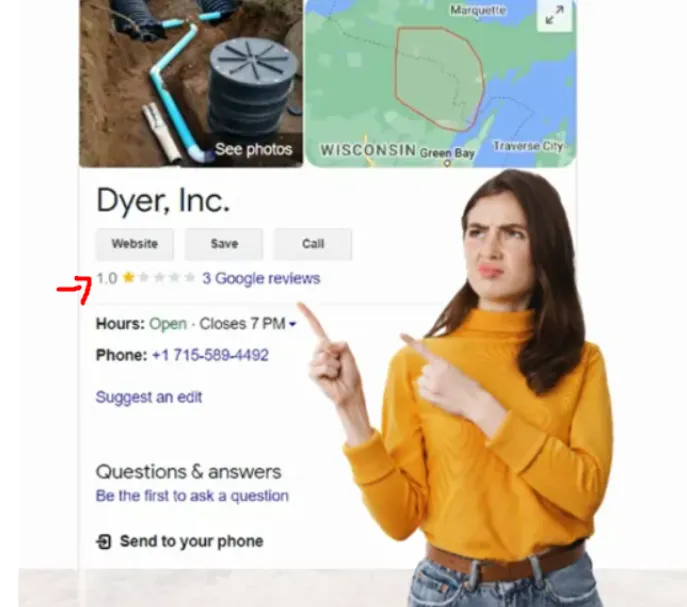
When homeowners read reviews, they can learn about communication, scheduling, cleanup, and how a company handles problems. Those details may help them evaluate a referral beyond the overall rating.
Read your own public reviews as a prospective customer would. Does the feedback describe the kinds of jobs you want? Are your replies helpful and professional? If there is a complaint, does the response explain an appropriate next step without attacking the customer or exposing private information?
Google says replying to reviews shows that you value customer feedback. That is a useful reason to respond, without claiming every reply improves rankings or guarantees a sale.
Do not try to make your reputation look perfect through invented reviews. Concentrate on delivering good service, inviting honest feedback, and responding in a way you would be comfortable showing to your next customer.

Show Evidence of Your Company, Not Just a Generic Industry
An excavator photo shows that excavation equipment exists. A documented project your company completed gives the homeowner something more relevant to evaluate.
Use photos of your actual trucks, team, equipment, and completed work when you have permission to share them. Add enough context to explain what the homeowner is seeing. A drainage project can describe the original standing-water problem and the work performed. A septic installation can explain your role without making unsupported claims about approvals or system performance.
Google recommends photos and videos that show what a business offers. For contractors, that is an opportunity to make your company and its work easier to understand, not a promise that uploading images will produce a particular ranking.
Keep illustrative graphics separate from real project evidence. The cartoon images in this article explain marketing ideas. They are not photographs of an actual contractor’s customers, crew, or completed installation.
Old Listings Can Create New Doubts
Your current website may be correct while an older directory page still displays a disconnected number. A homeowner can also encounter an outdated logo, a former address, or a social page created years ago and never updated.
Search your company name and inspect the public results that appear. Record the pages with incorrect information and identify which ones you control. For other listings, use the platform’s correction or ownership process rather than creating more duplicate entries.
The practical concern is customer confusion. You do not need to claim that every inconsistent listing triggers a Google penalty to justify fixing an incorrect phone number.
Prioritize details that can send someone to the wrong destination or create the wrong expectation. A working contact route matters more than making every minor design detail identical across the internet.
Test the Contact Path on a Phone
Looking trustworthy is only part of the job. A homeowner should be able to take the next step without fighting your website.
Open the public website from your profile using a phone. Check whether the page loads, the text is readable, and the contact button goes where it should. Test the phone number. Submit a clearly identified test inquiry and confirm it reaches the person responsible for responding.
Make sure your hours and availability descriptions are accurate. Do not advertise emergency or around-the-clock service unless your operation can support that promise.
Google reviews Business Profile edits before making them live. After requesting a correction, check the public result again rather than assuming that pressing Save finished the job.
Do Not Treat Your Own Search as Everybody’s Search
Searching your company name is useful for spotting problems, but one screen is not a universal report of what every homeowner sees.
Google explains that personalization can change some results. Location, device type, and the current search can still affect results even when personalization is turned off. Incognito mode is not a guarantee of an identical experience for every customer.
Use the search as a practical review of your public information. Ask someone outside the business to try it on their phone and explain what is clear or confusing. You are looking for correct identity, relevant information, and a working contact path, not trying to turn one test into a precise ranking measurement.
If you need broader visibility reporting, evaluate that separately. Finding your own website when you type your exact business name does not prove you are reaching homeowners who have never heard of you.
Give Someone Responsibility for Keeping It Current
An online-presence review should end with ownership, not a screenshot that sits in the owner’s phone.
Assign someone to handle corrections, check public contact details, and request appropriate project photos from the field. Review the information when services, hours, phone numbers, or coverage change. Recheck important edits after they become public.
You can also ask new customers what they looked at before calling. Their answers will not be perfect attribution data, but they can reveal practical problems, such as a confusing service page or an old number that still appears online.
Start with the issues that affect the customer’s decision now. Correct the wrong number before redesigning a profile graphic. Clarify installation services before worrying about another decorative slogan.
Make the Referral Easier to Act On
Your reputation may be strong among people who have worked with you. The next homeowner still needs enough public information to recognize that reputation and understand how to contact your company.
A company-name search should not leave them sorting through contradictory details or guessing what you do. Aim for a recognizable business, clear services, accurate coverage, credible evidence, and a straightforward next step.
This is different from chasing more impressions. It is making sure the interest you have already earned is supported by what people can actually find.
Send us a message today to find out how Excavation Marketing Pros can help your excavation or septic business present its strengths clearly online, reduce confusion, and turn more of the interest you have already earned into better-fit inquiries.












Facebook
Instagram
X
LinkedIn
Youtube
TikTok