



A septic lead is not valuable because it filled out a form, clicked an ad, or made the phone ring. It is valuable when it has a real problem your company is equipped to solve, is inside the area you can serve profitably, and has a reasonable path to an estimate and a booked job.
That distinction matters because established septic contractors are often sold the wrong scorecard. A marketing company celebrates low cost per lead. A call platform reports more conversations. An ad dashboard shows more clicks. Meanwhile, the owner looks at the schedule and asks the only question that counts: “Did any of this turn into the kind of work we want more of?”
The answer is not a universal dollar amount. The right lead cost depends on the service, the market, your close rate, your capacity, and the gross profit left after the job is complete. A $40 lead can be expensive if it produces a homeowner outside your area who wants a free diagnosis by phone. A $250 lead can be a bargain if it becomes a qualified system-replacement evaluation with a homeowner who is ready to move.
The goal is not to buy more names. It is to build a dependable system for recognizing, responding to, and measuring the opportunities that fit your septic company.
Start With the Type of Work You Want on the Schedule
A lead cannot be judged in a vacuum. First decide what a good job looks like for your company. For one established septic contractor, the priority may be pumping routes that are dense enough to run efficiently. For another, it may be inspections, repair work, drain-field evaluations, system replacements, septic excavation, or a balanced mix that keeps crews productive across the season.
The problem begins when the marketing message is broader than the operating plan. A company says it wants replacement work but advertises only cheap pumping. Another wants to protect a tightly defined service area but accepts every call from three counties away. Another wants homeowners who value professional work but trains its ads to attract people shopping for the lowest possible price.
Better leads begin with a better offer. Your website, Google Ads, Local Services Ads, review profile, service pages, and call handling should make it obvious which problems you solve. A homeowner with a failed inspection should see that you understand repairs and replacement decisions. A homeowner with a backup should know how to reach you quickly. A property owner planning a rural build should understand whether you handle septic site work, excavation, or both.
When the market can see the work you are built to perform, fewer poor-fit inquiries make it into the sales process. That is not a loss. It is protection for the estimator, dispatcher, and crew.

A Good Septic Lead Has Four Things Working in Its Favor
The first is a real and identifiable need. The homeowner may have a failed inspection, recurring backups, a damaged lid or baffle, a drainage concern, a repair recommendation, or a replacement decision ahead. The job does not have to be an emergency to be valuable. It does need a clear reason for the customer to take action.
The second is geographic fit. A request from outside your normal service area can look promising until travel time, fuel, route disruption, and crew availability are included. The same is true for a property that is technically within your territory but far from the kind of work already on the schedule. Define the area where a lead is worth pursuing, then make sure the office collects the address early.
The third is service fit. The opportunity should align with the equipment, licensing, capacity, and job types your team wants to deliver. If you do not provide a particular service, that does not make the caller a bad lead. It means the inquiry belongs with a referral partner, not on an estimator’s calendar.
The fourth is buyer readiness. A strong prospect may not know the final scope yet, but they can usually explain the problem, provide the address, answer basic questions, share an inspection report or photos when relevant, and describe a realistic time frame. A homeowner who is gathering information can still become a good future lead. The difference is whether your follow-up process keeps that person organized instead of treating every inquiry as an immediate dispatch.
Cost Per Lead Is a Starting Number, Not the Decision
A low cost per lead sounds good because it is easy to see. It is also easy to manipulate. You can lower the number by expanding the audience, making the ad vague, offering a broad giveaway, or accepting every form submission as a lead. None of those moves guarantees revenue.
The better question is what happens after the lead enters your business. Did the office make contact? Was the property inside the service area? Did the person need a service you actually provide? Was a site visit or estimate scheduled? Did the job close? What was the invoice amount, and what gross profit remained after labor, equipment, materials, disposal, permits, and other direct job costs?
Here is a simple way to think about it. Imagine your company receives ten paid inquiries. Six are within the service area and fit the services you want to sell. Two of those six become booked jobs. If each sold job produces $4,200 in gross profit, the ten inquiries generated $8,400 in gross profit before marketing expense. That is $840 of expected gross profit per original inquiry. A company that sets aside a sensible portion of that value for marketing can decide whether its actual lead cost is healthy instead of copying another contractor’s target.
The exact allocation is your decision. The discipline is the important part. Track your own numbers by service type, not just a blended total. A pumping lead, a repair lead, an inspection lead, and a system-replacement evaluation can have very different conversion paths and very different value to the business.
The First Call Determines Whether the Lead Gets Better or Worse
Many septic companies pay to create demand, then lose the advantage during intake. The phone is answered slowly. The office cannot tell whether the property is in the service area. The caller is asked to repeat the same information. The estimator receives a vague message such as “needs septic help,” then drives out without the inspection report, photos, or a clear description of the problem.
A strong intake process does not need to feel like an interrogation. It needs to gather the facts that determine whether the opportunity should move forward. The office should know the property address, the requested service, the homeowner’s description of the problem, the timing, the best contact method, and any useful documentation. For replacement or repair work, an inspection report, permit information, photos, prior estimates, or basic system history can make the next step more productive.
The point is not to reject people quickly. It is to respond professionally and put each inquiry into the correct path. An urgent backup may require one workflow. A homeowner planning a replacement in the next sixty days may need a consultation and follow-up plan. A pumping request might be valuable if it fits an efficient route and gives the company a chance to earn a review, identify maintenance needs, and stay in contact for future work.
Track the Lead All the Way to Gross Profit
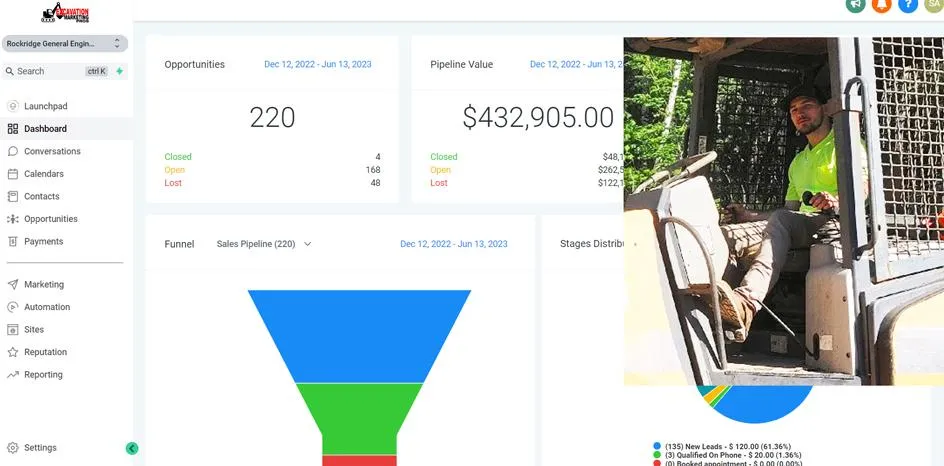
A CRM is useful only when it records decisions that change the business. For every paid lead source, track where the inquiry originated, which service the customer requested, whether it was qualified, when your team responded, whether an estimate was scheduled, whether the work was sold, and the revenue and gross profit attached to the job.
This gives you a fair way to evaluate Google PPC, Local Services Ads, Meta campaigns, referrals, organic search, and any lead vendor. A channel should not be called bad because one lead did not close. It should be judged after enough opportunities have moved through the full process.
It also exposes operational problems that advertising cannot fix. If the best leads are not closing because estimates sit too long, the answer is not automatically more ad spend. If replacement leads close at a strong rate but the crew cannot book them for weeks, capacity may be the issue. If calls are poor quality only in a certain location or service category, the targeting and service pages may need work.
Septic and excavation contractors who track this consistently can make decisions from evidence instead of opinion. They can increase spend where good work is coming from, tighten campaigns that create waste, improve their intake questions, and defend their marketing budget with real job data.
Do Not Buy Leads You Cannot Work Well
The most expensive lead is often not the highest-priced lead. It is the one your company cannot respond to, cannot serve, or cannot follow up on properly. Before increasing the budget, make sure your response standards are ready. Calls should be answered or returned quickly. Estimates should move within the promise you make. The team should know what counts as qualified, and the customer should receive a clear next step.
This is where marketing and operations meet. A septic company with a strong reputation, clean intake, fast response, and reliable follow-up can earn more from the same number of inquiries. A company that buys leads before those systems are in place often believes the channel failed when the real issue was what happened after the lead arrived.
The same principle applies when septic and excavation services overlap. A homeowner may begin with a septic problem but need drainage, access work, site preparation, or excavation support as the project becomes clearer. The office should recognize connected work without forcing every caller into a service that does not fit. Better questions reveal the complete opportunity and help the customer reach the right solution.
The Best Lead Is the One That Becomes a Good Customer
A worthwhile septic lead is one your team can serve well, price confidently, and turn into a completed job that meets your standards for margin and customer experience. It fits the service area, the service offering, the schedule, and the type of relationship you want to build.
Do not let a dashboard convince you that volume is the same as growth. The lead that matters is not the cheapest form fill. It is the homeowner with a real need, a realistic fit, and a clear next step into your sales process.
Send us a message today to find out how Excavation Marketing Pros can help your septic company attract better-fit opportunities, build stronger lead tracking, and turn marketing spend into work your crew wants to perform.













Facebook
Instagram
X
LinkedIn
Youtube
TikTok