
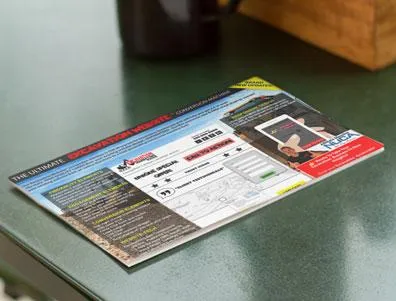

An excavation or septic website should do more than look professional. It should help a homeowner understand that your company handles the work they need, trust you enough to reach out, and have a simple way to contact you before they call the next contractor in Google.
That sounds obvious, but many established excavation and septic contractors still have websites that act like an online brochure. They show a logo, a few general services, maybe a phone number, and a stock photo of a machine. The website may look fine to the owner, but it does not answer the questions a homeowner is asking when there is a drainage problem, a failed septic system, a driveway issue, or a site-preparation project that needs to move forward.
A lead-generating website does not need gimmicks. It needs clarity, proof, local relevance, and a fast path from interest to conversation. The best sites make it easy for the right prospect to say, “This company does the exact work I need. They look credible. I can contact them now.”
A Lead-Generating Website Starts With the Right Jobs, Not a General Service List
The first job of your website is to make the work you want more visible. If a visitor lands on a generic page that says your company does excavation, septic, grading, drainage, demolition, trucking, and more, they may still have no idea whether you handle their specific project.
A homeowner with a failing septic system is not searching for a company that does “site work.” They may be searching for septic repair, septic tank replacement, drainfield work, septic inspections, or excavation for a system repair. A rural property owner may be looking for driveway construction, land clearing, culvert installation, drainage correction, building pad preparation, or site preparation for a new home.
Your website should have focused service pages for the project types you want to sell. Each page needs to explain the problem, show the type of customer you serve, describe the work in plain language, and make the next step obvious. This does not mean stuffing every page with the same city names and generic keywords. It means creating useful pages that match the decisions people are making.
When the site clearly connects a customer problem to your service, the visitor spends less time wondering if you are a fit. That produces better calls and fewer leads that were never qualified in the first place.
Local Search Visibility Gets the Right People to Your Website
A website cannot generate leads if local customers never find it. For excavation and septic contractors, that usually means making the site easy for Google and homeowners to understand. Your company name, service area, core services, reviews, project proof, contact information, and Google Business Profile all need to point in the same direction.
Local visibility is not only about ranking for a broad phrase such as “excavation contractor near me.” It is also about appearing when people search for a specific solution in a specific service area. The homeowner who searches for “septic repair near me” or “driveway grading contractor in [town]” is often much closer to acting than someone reading a general article about construction.
A strong local website reinforces where you work without pretending to serve every town in the state. It displays a consistent service area, shows real local projects, includes accurate contact details, and gives visitors a reason to trust that your crews are established in the market. If you work in several nearby areas, build useful service-area content around the work customers actually request there.
The goal is not more traffic for its own sake. The goal is more qualified traffic from people who can become profitable jobs.
The First Screen Must Answer Three Questions Fast
When a visitor reaches your homepage or service page, they should understand three things in seconds: what you do, where you do it, and what they should do next.
Too many contractor sites lead with vague language about quality, integrity, or decades of experience. Those ideas matter, but they do not help a homeowner who needs a septic repair estimate or needs to know if you build driveways. Put the service outcome first. Then support it with proof.
A practical first section might clearly say that you provide septic repair and replacement, drainage, excavation, driveway construction, or site preparation for homeowners in your service area. It should show a real project image or a clear visual tied to the work. It should also offer a simple next step such as request an estimate, call now, or send project photos.
The best call to action is not necessarily the most aggressive one. It is the one that matches the customer’s stage. Someone with an urgent septic issue may call immediately. Someone planning a building pad or large drainage project may want to share photos, request a site visit, or schedule a conversation. Give both types of prospects a low-friction way to move forward.
Project Proof Turns Browsers Into Better Leads
Before a homeowner contacts an excavation or septic contractor, they are trying to reduce risk. They want to know whether you have solved a problem like theirs, whether you work carefully around a property, and whether your crew can handle a project without creating a bigger mess.
This is where real project proof matters. Before-and-after photos, short project stories, customer reviews, clear explanations of your process, and videos from the field all do more than make a website look active. They show a homeowner what competent work looks like.
A strong project page does not need to be a case study with fancy language. It can simply explain what the property owner needed, what conditions the crew found, what work was completed, and what the finished result accomplished. For example, show a washed-out driveway before repair, explain the drainage or culvert issue, show the rebuilt surface, and include a brief note from the customer if available.
For septic contractors, proof may include clean restoration after an excavation, careful access planning, repaired drainage, a completed replacement area, or a customer explanation of how the company handled a difficult situation. Do not share private customer details, but do show the type of work and the standards your team brings to it.
The more specific the proof, the easier it is for the right customer to picture you working on their property.
A Website Must Make Contact Easy From Every Page
A surprisingly common lead leak is a website that makes the visitor search for the phone number, navigate back to the menu, or fill out a long form just to ask a basic question. If you want leads, put a clear contact option where the visitor needs it.
Your phone number should be easy to find and easy to tap on a mobile device. Your estimate form should ask for enough information to qualify the project, but not so much that a homeowner quits halfway through. A request for name, phone, email, location, service needed, and a short project description is usually enough to begin. If project photos would help, make it simple for the visitor to submit them or tell them how to send them after contact.
Use clear language around the response process. A homeowner wants to know what happens after they submit a form. Will someone call them? Can they expect a reply today? Do you offer a site visit for larger projects? A short explanation removes uncertainty and helps an established company stand apart from contractors who leave every inquiry in a voicemail pile.
This is also where operations and marketing meet. A website cannot make up for unanswered phones, slow follow-up, or estimates that disappear after a visit. But it can give your office a cleaner intake, better job details, and a more organized handoff to the estimator or crew.

Mobile Experience Is Not Optional for Contractor Leads
Many homeowners first search from their phone while standing in a yard, looking at a drainage issue, dealing with a septic problem, or discussing a project with a spouse. If the site is hard to use on a phone, the visitor may not give you a second chance.
A mobile-ready contractor website should load quickly, keep service information easy to scan, show project photos clearly, and make the call or form action obvious without forcing a visitor through several pages. The buttons need to be large enough to tap. The forms need to be short enough to complete. The images need to support the work rather than hide the message.
Test your site like a customer would. Search for a service on your phone. Land on the relevant page. Try to find the phone number. Try to request an estimate. If it takes too long or feels confusing, you have found a conversion problem before your prospects do.
Service Pages and Reviews Should Support the Sales Conversation
A website does not close every job by itself. It should make the eventual sales conversation easier. When a customer has already seen the type of work you do, read reviews from local homeowners, and understands the next step, your estimator is starting from a better position.
That is why reviews should not be buried on one generic page. Place relevant proof where it supports the service. A driveway page can show feedback from a driveway customer. A septic repair page can show a review that mentions responsiveness, cleanup, or clear communication. A site-preparation page can show proof that your team managed a larger project professionally.
Good websites also reduce price-only shopping. They show that your company is not simply sending a machine for the lowest hourly rate. You are planning the work, managing access, protecting the property, communicating clearly, and delivering a finished outcome. This gives the customer a more useful way to compare contractors than a bare number on an estimate.
Track What Happens After the Lead Arrives
A website that creates inquiry forms is useful. A website that helps you understand which pages, services, and traffic sources create sold jobs is far more valuable.
Track the source of new leads whenever possible. Was the customer from Google organic search, Google Ads, Local Services Ads, a referral, social media, or a direct visit? What service did they request? Did your office reach them quickly? Did the lead turn into an estimate? Did the estimate turn into a profitable job?
You do not need a complex enterprise dashboard to start. A CRM, a clean spreadsheet, or your existing estimating software can show enough to identify patterns. If a drainage service page consistently creates large projects, you know where to invest more marketing effort. If a page brings calls but they are all outside your service area or below your minimum job size, you know what to clarify.
This feedback loop keeps your website from becoming a set-it-and-forget-it project. It turns the site into a working part of your lead-generation system.
Build a Website Around the Customer Journey, Not Your Company History
Your company history, values, equipment, and team all matter. But the website should begin with the homeowner’s problem and guide them toward the next step. Most visitors are not looking for a long company biography. They are looking for confidence that you solve the work in front of them.
Lead-generating excavation and septic websites bring together the right service pages, local visibility, real project proof, clear contact options, fast mobile experience, and reliable follow-up. None of these elements is complicated by itself. The difference is putting them together with a plan.
If your website gets traffic but does not generate enough calls, estimate requests, or profitable projects, send us a message today to find out how Excavation Marketing Pros can help you turn your site into a clearer, more trackable lead-generation system for excavation and septic contractors.












Facebook
Instagram
X
LinkedIn
Youtube
TikTok